
Ingredient file // Flavor
New York Strip Flavor
A taste on the label, not a steak
New York Strip Flavor is a flavoring meant to make a food smell and taste like beef. It helps get the dog eating and adds no nutrition worth counting. It does not mean there is steak in the food.
- What it is
- A flavoring added to make a dog food smell and taste like beef, with its source undisclosed.
- Made from
- Undisclosed; meat, yeast or plant protein extracts
- Main job
- Flavor to drive eating
- Typical amount
- Not published for this flavor or for wet food
- Watch for
- Unknown protein source in elimination diets
- Not the same as
- Beef or beef steak
Straight answer
Is New York Strip Flavor safe for dogs?
Read past the flavor to the meats
The steak in the name comes from the flavor, not from the recipe. Skip past it and read the first five ingredients to see which proteins the food is really built on, and judge it by those. If your dog has a beef allergy, treat this flavor as possible beef.
- Why it is in the food
- Flavor to drive eating
- How common
- Listed by 2 of the 3,205 foods we track
Our read // In our catalog
In 1 of every 1,603 foods we track
Share of foods that list it
<1%
2 of the 3,205 foods with an ingredient list on file, from 2 brands. All wet dog food.
Each square is 1% of the catalog
Where it sits on the label
Median position 17. In the top five of 0 foods, so it is usually a minor ingredient.
Above the salt
Listed before the salt in 50% of foods. In the rest it is under about 1% of the recipe.
Who leans on it
50%
of the foods that list it are from Blue. 2 brands use it in total.
What it is
How it is made
Makers do not publish how this flavor is made. A 2021 review calls animal digest probably the most common pet food flavor enhancer: animal tissue broken down by enzymes, then heated into meaty notes.4,5
- 01 // Source Protein raw material Federal rules let natural flavor come from meat, poultry, seafood, yeast, vegetables or spices.
- 02 // Process Enzyme breakdown Proteases and lipases split the proteins and fats of clean, undecomposed animal tissue into smaller pieces.
- 03 // Process Heated with sugars Freed amino acids react with reducing sugars in the Maillard reaction, the same browning that flavors seared meat.
- 04 // Output Flavor concentrate A liquid or powder concentrate added to the recipe and named after the taste it imitates.
What is in it
Composition, as fed
0.5-3
% on kibble
What palatants sprayed on kibble usually run. No dose is published for wet food flavors like this one, and the maker does not say.
Why it is in the bag
What the manufacturer gets
-
01
Gets the dog eating
Palatants are added to improve flavor and raise preference. Earlier research cited in a 2021 review suggests smell is likely the main driver of a dog's food choice.5
-
02
Earns the steak name
AAFCO lets a flavor appear in a product name with no minimum amount, only a listed ingredient providing it. A 'with beef' name would need at least 3% beef.1,2
How much No maker publishes this flavor's dose, and the palatant review gives figures only for kibble coatings: 0.5 to 2% dry, 1 to 3% liquid.5
Our read // The claims
What the evidence supports
Strong: controlled studies in dogs agree. Some: small or mixed dog data. Thin: mechanism or lab work only. None: nothing, or the evidence points the other way.
-
Brands say
Dogs will like the taste better
Outruns the evidence
Evidence
- Strong
- Some
- Thin
- None
A 2021 review cites an older study saying dogs prefer beef most, then lamb and chicken, and notes earlier research suggesting odor might be the primary driver of choice. Neither finding tests this flavor; its effect on this product is assumed, not measured.5
-
Owners say
A meat flavor comes from real beef
Outruns the evidence
Evidence
- Strong
- Some
- Thin
- None
The federal definition of natural flavor covers extracts, hydrolysates and roasting products from meat, but also from yeast, vegetables and spices. A beef-sounding flavor can come from any of these, and the label need not say which.4
-
Critics say
Flavorings are artificial chemicals
Outruns the evidence
Evidence
- Strong
- Some
- Thin
- None
Federal rules require flavor to be declared on the list as 'natural flavor' or 'artificial flavor,' so the kind must be disclosed there, though not the specific substance behind it. Animal digest is common in pet food, but nothing published shows what this flavor is.4,5
-
Owners say
A New York strip food contains steak
Outruns the evidence
Evidence
- Strong
- Some
- Thin
- None
Under the AAFCO flavor rule, a named flavor needs no set percentage, only enough to be detected, supplied by a listed ingredient. Nothing requires strip steak, or any cut of steak, to be in the food.1,2
Straight answers
What owners ask
-
Q01
Is there any steak in it?
Not requiredThe flavor rule asks only that the flavor be detectable and come from a listed ingredient. The real beef in the food is whatever beef the list names, at its place by weight.1,2,3
-
Q02
Is it just filler?
No, it's flavorIt adds almost no nutrition, but it has a job: getting the dog to eat. Filler would have no job. Treat it as a taste additive and judge the food by its meats.5
-
Q03
Can my dog taste a strip steak?
No evidenceThe cut name is written for owners. Preference studies rank meats such as beef, lamb and chicken, not cuts of beef, and smell is thought to drive much of the choice.5
Who uses it
Brands, best sellers and the company it keeps
Top brands, by foods that list it
Foods that list it / all the brand's recipes we track.
Usually listed with, share of the foods that list it
- Beef 100%
- Water 100%
- Chicken Liver 100%
- Chicken 100%
- Beef Broth 50%
- Carrots 50%
- Potatoes 50%
- Dried Egg 50%
- Peas 50%
- Pea Flour 50%
- Animal Plasma 50%
- Wheat Gluten 50%
On the shelf
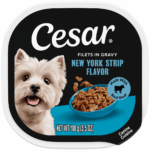
Foods that list New York Strip Flavor
2 foods in our catalog list it, highest on the label first.

Sources
What we read
Checked October 24, 2026.
- 1 Reading Labels
- 2 A Consumer's Guide: Overview of Pet Food Labels
- 3 Animal Food Labeling and Pet Food Claims
- 4 21 CFR 501.22 Animal foods; labeling of spices, flavorings, colorings, and chemical preservatives
- 5 Dry Pet Food Flavor Enhancers and Their Impact on Palatability: A Review
- 6 Critically appraised topic on adverse food reactions of companion animals (2): common food allergen sources in dogs and cats