
Ingredient file // Other
Titanium Dioxide
A cosmetic whitener with an open safety question
Titanium dioxide is a white pigment made from mineral ores. It makes food look lighter but gives dogs no nutrition. Its long term safety when eaten remains unsettled, so there is little reason to seek it out.
Role in the food Does a job- What it is
- A refined white mineral pigment added to food to make its color lighter and more opaque.
- Made from
- Titanium-bearing mineral ores
- Main job
- Whiten the food
- Typical amount
- Applicant reported 0.2 to 1% across pet food
- Watch for
- Unresolved long term oral safety
- Not the same as
- Titanium metal
Straight answer
Is Titanium Dioxide safe for dogs?
Choose the comparable food without the whitener
If titanium dioxide appears on the bag, read it as a color additive wherever it sits in the list. The label does not give its amount. It offers your dog no nutritional upside, and long term oral safety is unsettled. Given an otherwise comparable food without it, choose that one.
- Why it is in the food
- Whiten the food
- Watch for
- Uncertain long term intake
- How common
- Listed by 12 of the 3,205 foods we track
Our read // In our catalog
In 1 of every 267 foods we track
Share of foods that list it
<1%
12 of the 3,205 foods with an ingredient list on file, from 3 brands. 9 dry dog food, 3 wet dog food.
Each square is 1% of the catalog
Where it sits on the label
Median position 24. In the top five of 0 foods, so it is usually a minor ingredient.
Above the salt
Usually listed after the salt, which caps it at roughly 1% of the recipe in 100% of foods.
Price per lb
Median of the cheapest bag price across 7 priced foods, 72% below the catalog. The price is the food's, not the ingredient's.
Who leans on it
75%
of the foods that list it are from Kibbles n Bits. 3 brands use it in total.
What it is
How it is made
Pigment makers turn titanium-bearing ore into white powder for paints, coatings and food. The ore contains other minerals, so processing separates titanium compounds before forming and grinding the pigment crystals.4,7
- 01 // Source Titanium-bearing ore Ilmenite, natural rutile or titanium slag supplies the titanium used to make the pigment.
- 02 // Process Titanium separated A sulfate or chloride process separates titanium compounds from iron and other material in the ore.
- 03 // Process Crystals formed The purified compound becomes titanium dioxide crystals, which are washed and heated.
- 04 // Output White pigment powder The crystals are milled into a powder that a food maker can mix into a recipe.
What is in it
Composition, dry matter
99
% TiO2
The minimum purity specified for dried food-grade pigment. It describes the coloring powder, not nutrition delivered to a dog.
Why it is in the bag
A cosmetic whitener, with no nutrition for the dog
- Main nutrition
- Supporting nutrient
- Does a job
- Mostly filler
Makers add titanium dioxide as a colorant to make food look whiter and more opaque, which serves the buyer's eye rather than the dog. An applicant reported typical pet food use of 0.2 to 1%, and EFSA judged 1% the minimum level that works in dog and cat food, while 0.1% did little. The pigment is almost pure titanium dioxide, so at these amounts it adds no protein or energy.3,4
-
01
Lightens the food
The particles reflect light, making food look whiter and more opaque. The change serves the person buying the bag, not the dog eating it.3,7
-
02
Provides efficient coverage
Its strong opacity produces a visible color change with comparatively little powder. Pigment makers also supply much larger industries, including paints and coatings.7
-
03
Marks research diets
Researchers mix it into experimental dog foods and measure it in feces to estimate digestibility. That research use does not explain its appearance on a commercial ingredient list.1,2
How much An applicant reported 0.2 to 1% as typical across pet food and 3% as its highest used level; dog marker trials used 0.3 to 0.4%.1,2,3
Our read // The claims
What the evidence supports
Strong: controlled studies in dogs agree. Some: small or mixed dog data. Thin: mechanism or lab work only. None: nothing, or the evidence points the other way.
-
Brands say
Titanium dioxide makes food look whiter
Evidence
- Strong
- Some
- Thin
- None
An applicant's biscuit test raised lightness from 56.9 without pigment to 73.1 at 1% titanium dioxide. EFSA judged the color effect at 0.1% marginal. The test measured appearance, not a benefit to dogs.3
-
Owners say
It passes through dogs completely unchanged
Outruns the evidence
Evidence
- Strong
- Some
- Thin
- None
In 2 short dog digestibility studies, 0.3 to 0.4% titanium dioxide served as a fecal marker. EFSA said absorption appears limited but reported no absorption data in target animals. Use as a marker does not prove zero uptake.1,2,3
-
Owners say
FDA permission proves lifetime feeding is safe
Outruns the evidence
Evidence
- Strong
- Some
- Thin
- None
FDA allows specified food-color uses. A 12-dog marker trial did not assess lifetime harm. EFSA could not rule out DNA damage from particles, while JECFA found no convincing evidence of it in representative food pigment. Permission does not settle dog safety.1,3,5,6
-
Critics say
Titanium dioxide is just filler
Outruns the evidence
Evidence
- Strong
- Some
- Thin
- None
A feed test showed a clear lightening effect at 1%, so the powder has a practical job. That job is cosmetic: the pigment is almost entirely titanium dioxide and contributes no useful protein or energy.3,4
-
Critics say
Titanium dioxide causes cancer in dogs
Outruns the evidence
Evidence
- Strong
- Some
- Thin
- None
No cited dog study found cancer from eating it. JECFA's 2-year rodent feeding studies found no tumors, but EFSA flagged a rat study with increased precancerous colon lesions and said no adequate TiO2 nanoparticle carcinogenicity study exists, beyond its inhalation warning for workers.3,6
Straight answers
What owners ask
-
Q01
Is it just filler?
Cosmetic colorIt has a measurable job: making food look lighter. It does not add protein, energy or useful minerals for your dog. Treat it as an appearance ingredient when judging the recipe.3,4
-
Q02
Do dog trials prove safety?
NoOne digestibility experiment fed 12 dogs food containing 0.4% titanium dioxide as a marker. It compared measurement methods; it did not test the effects of feeding the pigment for a lifetime.1
-
Q03
Does the label show its amount?
NoThe ingredient list gives its weight rank, not its percentage. The applicant's 0.2 to 1% typical range covered pet food generally, with no separate dog food figure. It cannot tell you the amount in your bag.3,8
Who uses it
Brands, best sellers and the company it keeps
Top brands, by foods that list it
Foods that list it / all the brand's recipes we track.
Amazon best sellers that list it
Rank on Amazon's dog food best seller list, checked October 2026.
Usually listed with, share of the foods that list it
- Soybean Meal 92%
- Animal Fat 92%
- Water Sufficient for Processing 75%
- Beef and Bone Meal 75%
- Wheat Middlings 75%
- Corn Syrup 75%
- Propylene Glycol 67%
- Corn 58%
- Wheat 58%
- Animal Digest 58%
- Beef 33%
- Salt 25%
On the shelf
Foods that list Titanium Dioxide
12 foods in our catalog list it, highest on the label first.
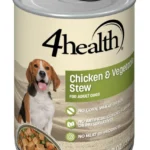 4health4health Stews Chicken Vegetable Stew For Dogs Wet Dog Food
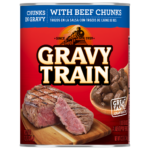 Gravy TrainGravy Train Chunks In Gravy With Beef Chunks Wet Dog Food
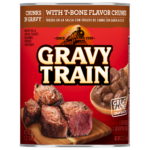 Gravy TrainGravy Train Chunks In Gravy With T-Bone Flavor Chunks Wet Dog Food
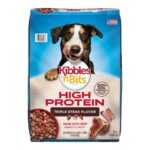 Kibbles n BitsKibbles n Bits Triple Steak Flavor: High Protein Dry Dog Food
 Kibbles n BitsKibbles n Bits Beefy Bits Dry Dog Food
Show 7 more
 Kibbles n BitsKibbles n Bits Mini Bits Bacon & Steak Flavor Dry Dog Food
 Kibbles n BitsKibbles n Bits Bistro Small Breed Mini Bits Oven Roasted Beef Flavor Dry Dog Food
 Kibbles n BitsKibbles n Bits Bacon & Steak Flavor Dry Dog Food
 Kibbles n BitsKibbles n Bits Small Breed Mini Bits Savory Beef & Chicken Flavors Dry Dog Food
 Kibbles n BitsKibbles n Bits Homestyle Grilled Beef & Vegetable Flavors Dry Dog Food
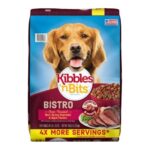 Kibbles n BitsKibbles n Bits Bistro Kibbles ‘n Bits : Roasted Beef, Vegetable & Apple Dry Dog Food
 Kibbles n BitsKibbles n Bits Bistro Oven Roasted Beef Flavor Dry Dog Food
Leaving it out
Foods without artificial colors
For owners who skip artificial colors: popular dry foods priced like the ones that list it ($0.63 to $1.26 per lb), with no artificial colors on the label.
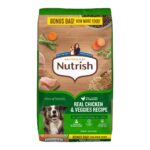 Rachael Ray NutrishRachael Ray Nutrish Real Chicken & Veggies Recipe Dry Dog Food
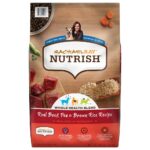 Rachael Ray NutrishRachael Ray Nutrish Real Beef, Pea & Brown Rice Recipe Dry Dog Food
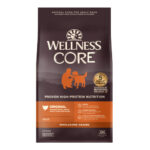 WellnessWellness Core Wholesome Grains Original Dry Dog Food
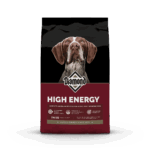 DiamondDiamond High Energy Adult Dry Dog Food
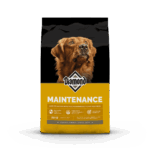 DiamondDiamond Maintenance Dry Dog Food
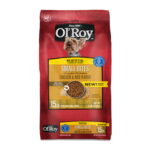 Ol' RoyOl’ Roy Complete Nutrition Small Bites Complete Nutrition Chicken and Rice Flavor Dry Dog Food
 WellnessWellness Core+ Beef & Barley Recipe Dry Dog Food
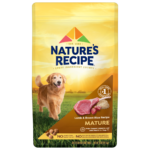 Nature's RecipeNature’s Recipe Original Mature Lamb & Brown Rice Recipe Dry Dog Food
Checked against the ingredient list we store for each food. Labels change, so read the bag before you buy.
Sources
What we read
Checked October 1, 2026.
- 1 Comparison of four digestibility markers to estimate fecal output of dogs
- 2 Apparent and true digestibility of macro and micro nutrients in adult maintenance dog foods containing either a majority of animal or vegetable proteins
- 3 Safety and efficacy of a feed additive consisting of titanium dioxide for all animal species (Titanium Dioxide Manufacturers Association)
- 4 Titanium dioxide
- 5 Titanium Dioxide as a Color Additive in Foods
- 6 TITANIUM DIOXIDE
- 7 Titanium dioxide: Chemical and Technical Assessment
- 8 Reading Labels