
Ingredient file // Other
Hydrochloric Acid
An acidity control, not a digestive benefit
Hydrochloric acid is a strong acid used to adjust acidity during food processing. Its job is in the recipe, not the dog's stomach. Seeing it on a label does not reveal the finished food's acidity or promise a health benefit.
- What it is
- Hydrogen chloride dissolved in water, used to adjust or neutralize acidity during food processing.
- Made from
- Hydrogen chloride gas and water
- Main job
- Control recipe acidity
- Typical amount
- Not published
- Watch for
- Proper dosing and supplier purity
- Not the same as
- Hydrochloride salts
Straight answer
Is Hydrochloric Acid safe for dogs?
Read it as a processing ingredient
Hydrochloric acid on a bag signals acidity control, not a health benefit. Ingredients are listed by weight, but the list gives neither the acid's amount nor the finished food's pH. Judge the food by its full formula and feeding purpose, not by this ingredient's chemical name.
- Why it is in the food
- Control recipe acidity
- How common
- Listed by 11 of the 3,205 foods we track
Our read // In our catalog
In 1 of every 291 foods we track
Share of foods that list it
<1%
11 of the 3,205 foods with an ingredient list on file, from 1 brand. All dry dog food.
Each square is 1% of the catalog
Where it sits on the label
Median position 12. In the top five of 0 foods, so it is usually a minor ingredient.
Above the salt
Usually listed after the salt, which caps it at roughly 1% of the recipe in 91% of foods.
Price per lb
Median of the cheapest bag price across 8 priced foods, 73% below the catalog. The price is the food's, not the ingredient's.
Who leans on it
100%
of the foods that list it are from Kibbles n Bits. 1 brand use it in total.
What it is
How it is made
Chemical plants produce most hydrochloric acid alongside other chemicals, especially chlorinated compounds. They capture the resulting hydrogen chloride gas and absorb it in water. Food grade suppliers then specify the liquid's strength and purity.7,8,9,10
- 01 // Source Chemical production Making chlorinated compounds produces hydrogen chloride gas; combining hydrogen and chlorine is another route.
- 02 // Process Gas captured The hydrogen chloride stream enters an absorption system instead of remaining in the manufacturing stream.
- 03 // Process Dissolved in water The gas is absorbed in water to produce a concentrated liquid acid.
- 04 // Output Food grade solution A supplier specifies the solution's acid concentration and impurity limits before selling it for food use.
What is in it
Composition, as fed
31.45
% HCl
The typical acid concentration in one food grade supplier's liquid. It describes the ingredient delivered to a plant, not the amount in dog food.
Why it is in the bag
What the manufacturer gets
-
01
Adjusts acidity
The acid lowers pH when added to a mixture. US animal food rules recognize hydrochloric acid as a buffer and neutralizing agent under good manufacturing or feeding practice.3,7
-
02
Neutralizes alkaline inputs
It reacts with alkaline material as a manufacturer moves a mixture toward its target acidity. The ingredient list does not report the pH reached.3,6,7
-
03
Uses an existing supply
Most US production comes alongside other chemical manufacturing. That existing supply gives food plants a source for a small processing job, subject to ingredient grade requirements.4,7,9
How much No dog food inclusion rate was published in the opened sources; US rules limit the amount to what the technical job requires.4
Our read // The claims
What the evidence supports
Strong: controlled studies in dogs agree. Some: small or mixed dog data. Thin: mechanism or lab work only. None: nothing, or the evidence points the other way.
-
Brands say
It controls acidity during processing
Evidence
- Strong
- Some
- Thin
- None
This is its documented technical job: US animal food rules name buffering and neutralizing uses. One supplier specifies 30.45 to 32.45% HCl in its liquid; that concentration does not reveal the finished food's pH.3,8
-
Brands say
It preserves food by killing germs
Outruns the evidence
Evidence
- Strong
- Some
- Thin
- None
FDA guidance says sufficiently low pH can inhibit bacterial growth and requires validation when acidification controls pathogens. A 30-food dog study measured acid titration, not germ survival. The ingredient listing proves neither killing nor preservation.1,5
-
Brands say
It helps dogs digest protein better
Outruns the evidence
Evidence
- Strong
- Some
- Thin
- None
A brand suggests acid processing makes protein easier to digest. Researchers titrated 30 dog foods with acid in a lab; they did not feed acid-treated food to dogs or measure protein absorption.1,11
-
Owners say
It prevents a dog's bladder stones
Outruns the evidence
Evidence
- Strong
- Some
- Thin
- None
A consensus panel of 6 specialists puts infection control first for the common infection-induced struvite stones in dogs and advises against urine acidification for calcium oxalate stones. Acid on a food label proves no stone benefit.2
-
Critics say
Its presence makes dog food poisonous
Outruns the evidence
Evidence
- Strong
- Some
- Thin
- None
A brand warns that hydrochloric acid should never appear in dog food. Concentrated acid is corrosive, but US animal food rules permit its controlled buffering and neutralizing use. A label alone does not show a harmful dose.3,4,7,11
Straight answers
What owners ask
-
Q01
Is it just filler?
NoIt has a defined processing job: adjusting or neutralizing acidity. It is not a protein source or a digestive supplement, and its presence says little about the rest of the recipe.3
-
Q02
Will it burn my dog?
Not by nameConcentrated hydrochloric acid is corrosive. An ingredient listing describes its use in manufacturing, not a bottle of concentrate served to your dog. The relevant issue is how the ingredient is dosed and handled.3,4,7
-
Q03
Does it improve digestion?
No proofDogs produce stomach acid, but that does not show added acid improves digestion. The dog food study used hydrochloric acid to test foods in a lab and called for research in living dogs.1
-
Q04
Does it treat bladder stones?
NoThe ingredient list cannot tell you a dog's urine pH. Stone care depends on the stone type: infection control is central for infection-induced struvite, while urine acidification is discouraged for calcium oxalate stones.2,6
Who uses it
Brands, best sellers and the company it keeps
Top brands, by foods that list it
Foods that list it / all the brand's recipes we track.
Amazon best sellers that list it
- #55 Kibbles n Bits Small Breed Mini Bits Savory Beef & Chicken Flavors Dry Dog Food
- #59 Kibbles n Bits Original Savory Beef & Chicken Flavors Dry Dog Food
Rank on Amazon's dog food best seller list, checked October 2026.
Usually listed with, share of the foods that list it
- Soybean Meal 100%
- Beef and Bone Meal 100%
- Animal Fat 100%
- Wheat Middlings 100%
- Corn Syrup 100%
- Propylene Glycol 91%
- Corn 73%
- Wheat 73%
- Water Sufficient for Processing 73%
- Animal Digest 64%
- Ground Whole Corn 27%
- Whole Wheat 27%
On the shelf
Foods that list Hydrochloric Acid
11 foods in our catalog list it, highest on the label first.
 Kibbles n BitsKibbles n Bits Small Breed Mini Bits Savory Beef & Chicken Flavors Dry Dog Food
 Kibbles n BitsKibbles n Bits Original Savory Beef & Chicken Flavors Dry Dog Food
Show 9 more
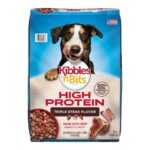 Kibbles n BitsKibbles n Bits Triple Steak Flavor: High Protein Dry Dog Food
 Kibbles n BitsKibbles n Bits Meaty Middles Prime Rib Flavor Dry Dog Food
 Kibbles n BitsKibbles n Bits Mini Bits Bacon & Steak Flavor Dry Dog Food
 Kibbles n BitsKibbles n Bits Bacon & Steak Flavor Dry Dog Food
 Kibbles n BitsKibbles n Bits Homestyle Grilled Beef & Vegetable Flavors Dry Dog Food
 Kibbles n BitsKibbles n Bits Bistro Small Breed Mini Bits Oven Roasted Beef Flavor Dry Dog Food
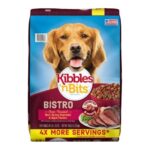 Kibbles n BitsKibbles n Bits Bistro Kibbles ‘n Bits : Roasted Beef, Vegetable & Apple Dry Dog Food
 Kibbles n BitsKibbles n Bits Bistro Oven Roasted Beef Flavor Dry Dog Food
 Kibbles n BitsKibbles n Bits Beefy Bits Dry Dog Food
Sources
What we read
Checked October 25, 2026.
- 1 Buffering Capacity of Various Commercial and Homemade Foods in the Context of Gastric Canine Digestion
- 2 ACVIM Small Animal Consensus Recommendations on the Treatment and Prevention of Uroliths in Dogs and Cats
- 3 21 CFR § 582.1057 - Hydrochloric acid
- 4 21 CFR § 582.1 - Substances that are generally recognized as safe
- 5 Hazard Analysis and Risk-Based Preventive Controls for Food for Animals
- 6 Reading Labels
- 7 Water Treatment Chemical Supply Chain Profile: Hydrochloric Acid
- 8 Specification Sheet FCC
- 9 Detrex Food and Drug Guarantee Statement
- 10 Hydrochloric Acid
- 11 Hydrochloric Acid in Dog Food