Can Dogs Eat Raw Fish? Salmon Poisoning, Smoked Salmon And Sushi
Not a good idea. Raw salmon or trout from the Pacific Northwest can cause salmon poisoning disease, which is fatal untreated. Cooked, plain, boneless fish is fine.
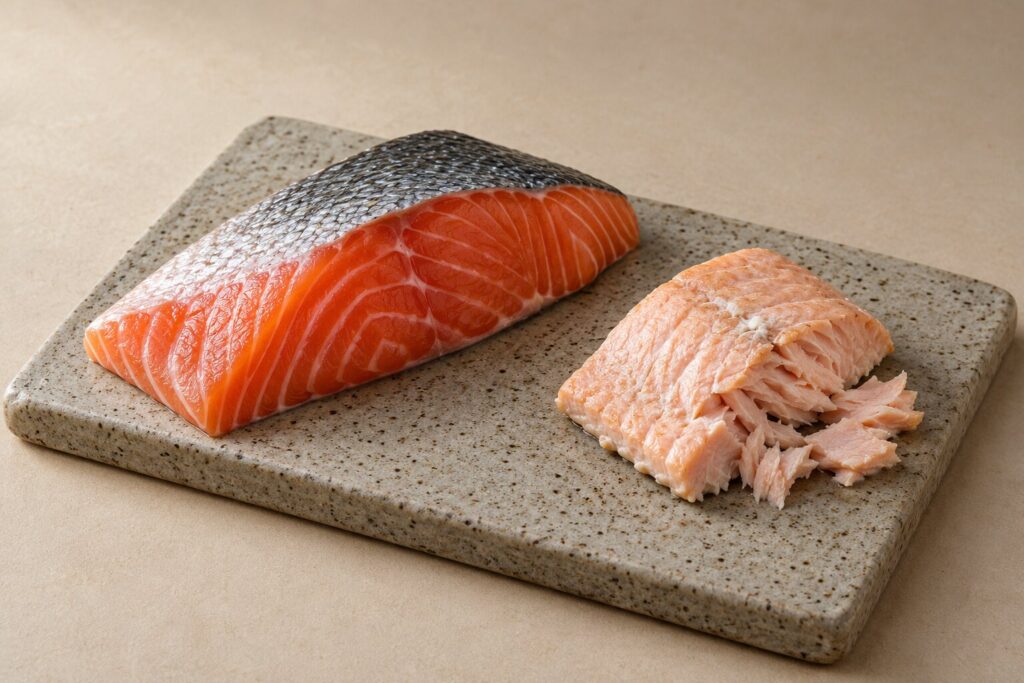
Not as a habit, and in one region not ever: raw salmon, trout and steelhead from the Pacific Northwest can carry salmon poisoning disease, which kills most dogs that are not treated. Outside that region raw fish still brings bacteria, parasites and bones. Cook it plain and boneless, and fish turns into one of the better treats you can share.
Fish Prepared Different Ways, Ranked

| Fish | Verdict | Why |
|---|---|---|
| Plain cooked boneless fish (salmon, cod, whitefish) | Best option | Cooking kills parasites and bacteria. Good protein and omega 3 fats |
| Sardines canned in water, no salt added | Fine | Cooked in the can, and the small bones are soft |
| Commercial raw diets containing fish | Caution | Made to be complete, but raw pet food can carry Salmonella and Listeria |
| Hot smoked salmon | Avoid | Cooked, but heavily salted |
| Cold smoked salmon and lox | Avoid | Never cooked, very salty, and a known Listeria risk |
| Sushi and sashimi | Avoid | Raw fish plus soy sauce, wasabi, and sometimes avocado or scallion |
| Raw supermarket fish with bones | Avoid | Bacteria, parasites, and bones that can choke or pierce the gut |
| Raw salmon, trout or steelhead from the Pacific Northwest, including fish found on riverbanks | Never | Can carry salmon poisoning disease, fatal if untreated |
What Is Salmon Poisoning Disease?
It is an infection, not a toxin. Salmon and trout from the coastal Pacific Northwest, roughly northern California up to Alaska, can carry a small parasitic fluke. The fluke carries a bacterium called Neorickettsia helminthoeca, and when a dog eats the raw fish, the bacterium gets into the dog. Other fish that swim upriver to spawn, steelhead among them, can carry it too.
The Merck Veterinary Manual says that without treatment, up to 90% of affected dogs die, usually within about two weeks of first getting sick. Treatment works well when it starts early: an antibiotic, usually doxycycline, plus a dewormer for the fluke, with fluids and supportive care for dogs that are already very sick.
Fall is the riskiest season, but infection can happen year round. Salmon runs bring dead and dying fish up onto the banks of rivers where people walk dogs, and a dog that rolls in one will often take a bite. If you hike or fish in the region during the fall salmon runs, keep your dog leashed near water.
If Your Dog Ate Raw Salmon Or Trout
If the fish could have come from the Pacific Northwest, call your vet today and tell them it was raw salmon or trout. Do not wait to see what happens. Signs usually show up about 5 to 7 days after eating, sometimes later, and they look like a lot of other illnesses unless the vet knows about the fish:
- Fever, then sometimes a drop to below normal temperature
- Loss of appetite and lethargy
- Vomiting and diarrhea, which may be bloody
- Swollen lymph nodes, discharge from the eyes or nose, weight loss
Vets usually confirm it by finding fluke eggs in a stool sample or the organism in a lymph node sample. If the raw fish came from somewhere else and your dog only has a mild upset stomach, our guide to easing an upset stomach covers home care and the signs that mean a vet visit.
Can Dogs Eat Smoked Salmon?
It is best avoided. Lox, nova and most sliced smoked salmon are cold smoked or cured, which means the fish was never cooked, so neither method can be trusted to kill parasites. Cold smoked fish is also a known source of Listeria. Hot smoked salmon is cooked, but both kinds are salted heavily, many times saltier than fresh salmon.
Is smoked salmon bad for dogs if one slice falls off a bagel? A single bite of store-bought smoked salmon is unlikely to hurt a healthy dog. Just do not make it a treat, and keep the cream cheese, capers and onion away from your dog. For a bigger haul, or a dog that gets very thirsty or starts vomiting afterward, see our guide on salt poisoning. Smoked salmon a friend caught in the Pacific Northwest and smoked at home is a different matter: treat it as raw.
Other Risks Of Raw Fish
- Bacteria: Salmonella and Listeria can make dogs sick, and dogs can pass them on to people in the house even when they seem fine. The same reasoning applies to raw chicken.
- Parasites: worms such as Anisakis and fish tapeworms are killed by cooking.
- Thiaminase: some raw fish, such as herring and smelt, contain an enzyme that breaks down vitamin B1. This mostly matters for dogs fed raw fish regularly.
- Bones: small fish bones can lodge in the mouth or throat, and larger ones can damage the esophagus or gut.
How Much Cooked Fish
Plain cooked salmon has about 200 calories per 100g, or roughly 57 per ounce, so it adds up fast. Treats of any kind should stay under 10% of daily calories. Use our daily calorie guide for your dog’s number.

| Dog weight | Cooked boneless salmon per day |
|---|---|
| Under 10 lb | About a quarter to half an ounce |
| 10 to 25 lb | About half to 1 ounce |
| 25 to 50 lb | About 1 to 2 ounces |
| Over 50 lb | About 2 to 3 ounces |
Use the lower end of each range for smaller or less active dogs. Leaner white fish such as cod has fewer calories, so you can give a little more of it. For canned fish and the mercury question, see our guide to tuna.
Which Dogs Should Skip It
- Any dog in the Pacific Northwest that could get raw salmon, trout or steelhead
- Puppies, senior dogs, and dogs with weak immune systems or on chemotherapy
- Dogs living with babies, older people or anyone immunocompromised, because of bacteria the dog can shed
- Dogs with a history of pancreatitis, which should avoid fatty fish such as salmon even cooked
- Dogs with heart or kidney disease on low sodium diets, which should never get smoked fish
- Dogs with a known fish allergy
Raw Fish In Dog Food
Fish is a common ingredient in dog food, but raw fish is not. Of the 3,207 published US dog foods in our catalog, none list raw fish as an ingredient. The salmon, whitefish and fish meal in kibble and canned food are cooked during manufacturing, which takes care of the parasite question. If you want fish in your dog’s bowl, a fish-based recipe from our dog food reviews is the simple route. If you feed a commercial raw diet, handle it like raw meat for people: wash hands, bowls and counters afterward.
Raw shellfish carries similar risks, as our guide to shrimp explains. For anything else on your plate, check the food checker.
In The Kibble reads labels and publishes what the numbers say. Guides are general information, not veterinary advice. Your vet knows your dog's history and we do not, so take anything here to them before you change how you feed.
Found this useful?
Comments
No comments yet. Tried this with your dog? Tell other readers how it went.