
Ingredient file // Animal protein
Bison Kidney
A mineral-rich organ, best kept to a small share
Bison kidney is a lean organ meat, high in protein, found mostly in frozen raw dog foods. It supplies concentrated selenium plus some iron. That is useful in small amounts, and it is why kidney stays a minor ingredient.
- What it is
- The kidneys of farmed American bison, used raw as an organ meat in frozen dog foods.
- Made from
- Kidneys from bison harvested for meat
- Main job
- Organ meat for minerals and protein
- Typical amount
- Not published; selenium caps it below a third of dry matter
- Watch for
- Raw handling, and dogs prone to urate stones
- Not the same as
- Bison liver
Straight answer
Is Bison Kidney safe for dogs?
Read it as a mineral source, not the meat
Bison kidney belongs below the muscle meat, near the other organs like bison liver and heart. If it sits there, the order is right. Check that the food is labeled complete and balanced, since organs alone do not balance a raw diet. Then handle it like raw meat.
- Why it is in the food
- Organ meat for minerals and protein
- How common
- Listed by 2 of the 3,205 foods we track
Our read // In our catalog
In 1 of every 1,603 foods we track
Share of foods that list it
<1%
2 of the 3,205 foods with an ingredient list on file, from 2 brands. All frozen dog food.
Each square is 1% of the catalog
Where it sits on the label
Median position 4. In the top five of 2 foods, so it is usually a main ingredient.
Above the salt
Almost always listed before the salt, so there is more of it than a pinch.
Who leans on it
50%
of the foods that list it are from Northwest Naturals. 2 brands use it in total.
What it is
How it is made
Bison are raised in the US for meat. Their kidneys are organs, which AAFCO counts as meat by-products. Raw dog food brands blend organs with muscle meat, then freeze the mix, sometimes after a high-pressure step instead of cooking.3,4,5,12
- 01 // Source Farmed bison Bison are harvested at a plant or by a mobile field unit. USDA inspection is voluntary for bison, not mandatory.
- 02 // Process Blended with meat Raw formulas mix organs with muscle meat. One recipe type in a study held 20 to 46% meat and 42 to 68% organs.
- 03 // Process Pressure treated Some raw foods get high pressure instead of heat. In tests, 586 MPa for 2 minutes cut Salmonella by 99.999%.
- 04 // Output Frozen raw food Packed and frozen. Listeria resisted pressure better than Salmonella, and blends skipping that step get no kill step at all.
What is in it
Composition, as fed
76
% protein (dry)
Protein share of the dry matter, worked from 17.5% protein at 77% water in beef kidney. It is a lean organ, not a fatty one.
Why it is in the bag
What the manufacturer gets
-
01
Trace minerals in a small dose
Beef kidney carries 139 µg of selenium and 4.6 mg of iron per 100 g fresh, so a small share covers much of a recipe's need.1,2
-
02
Lean protein
At 17.5% protein and 3.1% fat as fed, kidney adds protein without much fat, unlike fattier trim.1
-
03
Uses more of the carcass
Bison is a niche meat. Organs like kidney are part of every carcass and count as meat by-products, which AAFCO calls safe and nutritious for animals.4,5
How much At about 6 mg selenium per kg dry, kidney above a third of a diet's dry matter would pass AAFCO's 2 mg/kg ceiling.1,2
Our read // The claims
What the evidence supports
Strong: controlled studies in dogs agree. Some: small or mixed dog data. Thin: mechanism or lab work only. None: nothing, or the evidence points the other way.
-
Brands say
Kidney is a rich source of selenium and iron
Outruns the evidence
Evidence
- Strong
- Some
- Thin
- None
One study of 20 cattle found 139 µg selenium per 100 g fresh beef kidney, about 6 mg/kg dry, three times AAFCO's whole-diet ceiling. Iron measured 4.6 mg per 100 g. Bison was not tested.1,2
-
Vets say
Raw organ meats carry harmful bacteria
Evidence
- Strong
- Some
- Thin
- None
FDA tested 196 raw pet foods from 2010 to 2012: 15 carried Salmonella and 32 Listeria monocytogenes. The contamination is documented. How often it makes dogs, rather than the people handling the food, sick was not measured.3
-
Brands say
Bison is a novel protein for allergic dogs
Outruns the evidence
Evidence
- Strong
- Some
- Thin
- None
Beef was the top dog food allergen, in 102 of 297 dogs. In 760 dogs, IgE to beef and lamb ran strongly together. Bison is a close relative of cattle, and no study has tested it in beef-allergic dogs.10,11
-
Owners say
Organ meats make a raw diet complete
Outruns the evidence
Evidence
- Strong
- Some
- Thin
- None
Of 95 home raw rations, 60% had at least one imbalance, often iodine, zinc, copper or calcium. Kidney cannot fix calcium: it holds 13 mg per 100 g against 255 mg phosphorus.1,6
-
Owners say
Feeding kidney supports a dog's kidneys
Outruns the evidence
Evidence
- Strong
- Some
- Thin
- None
No study tests the like-supports-like idea. In a 38-dog randomized trial, dogs with kidney disease had fewer uremic crises and deaths on a renal diet. Renal diets restrict phosphorus, and kidney supplies 255 mg per 100 g.1,8,9
Straight answers
What owners ask
-
Q01
Is it just filler?
NoFiller adds bulk and no nutrients. Kidney is about 76% protein on a dry basis and carries 139 µg of selenium per 100 g fresh. The risk with kidney is feeding too much of it.1,2
-
Q02
Is bison meat USDA inspected?
OptionalBison count as an exotic species, so federal inspection is not mandatory. Plants can choose voluntary USDA FSIS inspection. Ask the brand whether its bison came from an inspected plant.4
-
Q03
Is it safe for a Dalmatian?
Not idealDalmatians, English bulldogs and Black Russian terriers can carry an SLC2A9 mutation that raises uric acid in the urine. For these dogs, nutritionists prefer low-purine diets over ones built on organ meats.7
Who uses it
Brands, best sellers and the company it keeps
Top brands, by foods that list it
Foods that list it / all the brand's recipes we track.
Usually listed with, share of the foods that list it
- Bison Heart 100%
- Bison Liver 100%
- Broccoli 100%
- Beef Kidney 50%
- Beef Heart 50%
- Beef Liver 50%
- Beef Bone 50%
- Carrots 50%
- Lettuce 50%
- Bison 50%
- Ground Bison Bone 50%
- Butternut Squash 50%
On the shelf
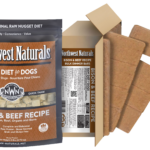
Foods that list Bison Kidney
2 foods in our catalog list it, highest on the label first.

Sources
What we read
Checked October 25, 2026.
- 1 Offal Chemical Composition from Veal, Beef, and Lamb Maintained in Organic Production Systems
- 2 Selenium and Dogs: A Systematic Review
- 3 Get the Facts! Raw Pet Food Diets can be Dangerous to You and Your Pet
- 4 Are Bison Amenable or Non-Amenable? How Does the Definition of Bison Affect Harvest Systems and Quality
- 5 What's in the Ingredients List?
- 6 Intake of minerals, trace elements and vitamins in bone and raw food rations in adult dogs
- 7 Nutritional Management of Genetic Hyperuricosuria: Case Report
- 8 Dietary Guidelines for Dogs with Chronic Kidney Disease (CKD)
- 9 Clinical evaluation of dietary modification for treatment of spontaneous chronic renal failure in dogs
- 10 Critically appraised topic on adverse food reactions of companion animals (2): common food allergen sources in dogs and cats
- 11 Food antigen-specific IgE in dogs with suspected food hypersensitivity
- 12 Inactivation of Salmonella, Shiga Toxin-producing E. coli, and Listeria monocytogenes in Raw Diet Pet Foods Using High-Pressure Processing