
Ingredient file // Other
Blue 2
Blue color for buyers, nothing for nutrition
Blue 2 is a synthetic dye, also called indigo carmine, added to give kibble a blue tint. It supplies no meaningful nutrition or flavor. The color helps sell a consistent look to owners; evidence does not show that dogs prefer it.
Role in the food Does a job- What it is
- A certified synthetic blue dye added in small amounts to change the appearance of dog food.
- Made from
- Synthetic indigo treated with sulfuric acid
- Main job
- Colors kibble blue
- Typical amount
- Proposed use: 10 to 200 mg/kg of feed
- Watch for
- The label does not disclose its dose
- Not the same as
- Blue 1
Straight answer
Is Blue 2 safe for dogs?
Judge the food beyond its blue pieces
Blue 2 near the end of an ingredient list tells you the maker chose a colored look. It tells you nothing useful about protein quality or whether your dog likes the food. Read the main ingredients and nutritional analysis first. If you want food without cosmetic dye, choose one without Blue 2 on the label.
- Why it is in the food
- Colors kibble blue
- Watch for
- Purity and amount used
- How common
- Listed by 31 of the 3,205 foods we track
Our read // In our catalog
In 1 of every 103 foods we track
Share of foods that list it
<1%
31 of the 3,205 foods with an ingredient list on file, from 4 brands. All dry dog food.
Each square is 1% of the catalog
Where it sits on the label
Median position 25. In the top five of 0 foods, so it is usually a minor ingredient.
Above the salt
Usually listed after the salt, which caps it at roughly 1% of the recipe in 100% of foods.
Price per lb
Median of the cheapest bag price across 31 priced foods, 74% below the catalog. The price is the food's, not the ingredient's.
Who leans on it
48%
of the foods that list it are from Pedigree. 4 brands use it in total.
What it is
How it is made
Chemical manufacturers make Blue 2 deliberately for coloring food. They produce synthetic indigo, alter it so it dissolves in water, then purify the resulting dye before it reaches a pet food plant.1,5,6
- 01 // Source Synthetic indigo A chemical process starting with aniline and formaldehyde produces indigo, which is purified before further processing.
- 02 // Process Sulfonated Heating indigo with sulfuric acid changes it into the water-soluble blue dye called indigo carmine.
- 03 // Process Purified and certified The dye is isolated and purified; FDA checks batches against identity and impurity specifications.
- 04 // Output Blue powder The finished coloring reaches food manufacturers as a dark blue powder or granules.
What is in it
Composition, as fed
86-97
% color
Total coloring matter measured across batches of the dye powder. This describes the additive itself, not the amount in a bag of kibble.
These measured components overlap: the related blue compounds contribute to total coloring matter. The published batch results give no separate moisture figures, so an honest dry matter conversion is unavailable.1
Why it is in the bag
Colors the kibble for owners, adds no nutrition
- Main nutrition
- Supporting nutrient
- Does a job
- Mostly filler
Blue 2 is there for looks. EFSA assesses it as a colorant feed additive, and makers use it to give kibble a blue tint that buyers see. It adds no protein, fat or fiber. US labels list ingredients by weight, and in the foods that use it, it sits near the end, so the amount is likely far too small to change the food's nutrition. Its job is real but cosmetic, aimed at owners rather than dogs.1,8
-
01
Tints the kibble
Blue 2 dissolves in water and adds blue color to the food. It is a visual ingredient, with no nutritional or flavoring job.1,5
-
02
Keeps color consistent
Pet food color suppliers say manufacturers use added color to cover differences between batches. That gives repeat buyers a familiar-looking product.7
-
03
Colors at small doses
An applicant proposed 10 to 200 mg/kg of feed for dogs and cats. A small dose spreads the coloring cost across a large amount of food.1,7
How much An applicant proposed 10 to 200 mg/kg of feed; EFSA assessed up to 250 mg/kg of complete dog food as safe.1
Our read // The claims
What the evidence supports
Strong: controlled studies in dogs agree. Some: small or mixed dog data. Thin: mechanism or lab work only. None: nothing, or the evidence points the other way.
-
Brands say
Blue 2 is safe at ordinary dog food levels
Evidence
- Strong
- Some
- Thin
- None
EFSA assessed indigo carmine as safe up to 250 mg/kg of complete dog food. An older beagle feeding study found no dye-attributed lesions, but viral deaths limited that study. The assessment applies to dye meeting purity specifications.1,4
-
Brands say
Blue 2 makes kibble more appealing to buyers
Outruns the evidence
Evidence
- Strong
- Some
- Thin
- None
Owners judging 8 commercial dog foods cared strongly about appearance and color. That study did not isolate Blue 2 or show that this particular shade improves sales. The claim is plausible, but dye-specific proof is missing.3,7
-
Brands say
Dogs prefer kibble colored blue
Outruns the evidence
Evidence
- Strong
- Some
- Thin
- None
A color-vision study tested 3 dogs and showed they distinguish colors. The 8-food appearance study tested owners, not dogs eating blue kibble. Seeing a color does not demonstrate a preference for Blue 2.2,3
-
Owners say
Blue 2 causes cancer in dogs
Outruns the evidence
Evidence
- Strong
- Some
- Thin
- None
A rat experiment produced injection-site tumors in 14 of 80 injected animals; injection does not model eating kibble. A 2-year beagle feeding study reported no dye-attributed lesions, although viral deaths weakened its conclusion.4
-
Owners say
Blue 2 makes dogs hyperactive
Outruns the evidence
Evidence
- Strong
- Some
- Thin
- None
EFSA reviewed toxicity studies but reported no controlled dog behavior test of Blue 2. The older dog feeding study recorded clinical signs and pathology rather than hyperactivity. There is no direct evidence for this claim.1,4
Straight answers
What owners ask
-
Q01
Is it just filler?
NoIt has a job: coloring the kibble. It adds no meaningful protein, fat or fiber, so it does nothing for the food's nutritional value. Treat it as a cosmetic ingredient.1,5
-
Q02
Can dogs see blue kibble?
YesDogs can distinguish blue from some other colors. That does not mean blue kibble tastes better to them or makes them eat more; the appearance research here measured owners' reactions.2,3
-
Q03
Is Blue 2 banned?
NoFDA lists Blue 2 for coloring food and requires certification of its batches. Its presence on a US dog food label is not, by itself, evidence of an unsafe product.5,6
-
Q04
Can I tell how much is added?
NoThe ingredient list names a certified dye but does not state its dose. Its place near the end tells you it weighs less than ingredients above it, not its concentration in milligrams.6
Who uses it
Brands, best sellers and the company it keeps
Top brands, by foods that list it
Foods that list it / all the brand's recipes we track.
Amazon best sellers that list it
- #12 Pedigree Adult Grilled Steak & Vegetable Flavor Dry Dog Food
- #22 Cesar Filet Mignon Flavor & Spring Vegetables Garnish Dry Dog Food
- #41 Pedigree Small Dog Grilled Steak and Vegetable Flavor Dry Dog Food
- #73 Pedigree Puppy Chicken & Vegetable Flavor Dry Dog Food
Rank on Amazon's dog food best seller list, checked October 2026.
Usually listed with, share of the foods that list it
- Soybean Meal 100%
- Meat and Bone Meal 84%
- Animal Fat 77%
- Natural Flavor 74%
- Corn Gluten Meal 74%
- Chicken By-Product Meal 58%
- Salt 45%
- BHA 45%
- Citric Acid 45%
- Whole Grain Ground Corn 45%
- Whole Grain Corn 39%
- Mixed Tocopherols 35%
On the shelf
Foods that list Blue 2
31 foods in our catalog list it, highest on the label first.
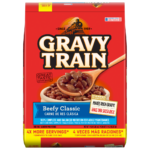 Gravy TrainGravy Train Beefy Classic Dry Dog Food
 PurinaPurina Dog Chow Tender & Crunchy Dry Dog Food
 PurinaPurina Dog Chow High Protein with Real Lamb Dry Dog Food
 PurinaPurina Alpo Come & Get It! Cookout Classics Dry Dog Food
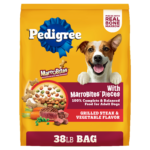 PedigreePedigree with MarroBites Adult, Grilled Steak and Vegetable Dry Dog Food
 PedigreePedigree Small Dog Roasted Chicken, Rice & Vegetable Flavor Dry Dog Food
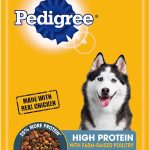 PedigreePedigree High Protein Chicken & Turkey Flavor Dry Dog Food
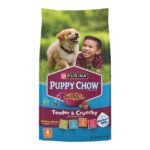 PurinaPurina Puppy Chow Tender & Crunchy Dry Dog Food
 PedigreePedigree High Protein Beef and Lamb Flavor Dry Dog Food
 CesarCesar Porterhouse Flavor & Spring Vegetables Garnish Dry Dog Food
 CesarCesar Filet Mignon Flavor & Spring Vegetables Garnish Dry Dog Food
 PurinaPurina Alpo Prime Cuts Dry Dog Food
Show 19 more
 PurinaPurina Dog Chow High Protein Real Chicken Dry Dog Food
 PurinaPurina Dog Chow Complete Adult with Real Chicken Dry Dog Food
 PurinaPurina Dog Chow Little Bites for Small Dogs Dry Dog Food
 PurinaPurina Dog Chow Complete Adult with Real Beef Dry Dog Food
 PedigreePedigree Puppy Chicken & Vegetable Flavor Dry Dog Food
 PedigreePedigree Adult, Roasted Chicken & Vegetable Dry Dog Food
 PedigreePedigree Healthy Weight Roasted Chicken, & Vegetable Flavor Dry Dog Food
 PedigreePedigree Big Dogs Roasted Chicken, Rice & Vegetable Dry Dog Food
 PedigreePedigree Adult Roasted Chicken, Rice & Vegetable Flavor Dry Dog Food
 PedigreePedigree Adult Grilled Steak & Vegetable Flavor Dry Dog Food
 PedigreePedigree Small Dog Grilled Steak and Vegetable Flavor Dry Dog Food
 PedigreePedigree Adult, Roasted Lamb & Vegetable Dry Dog Food
 PedigreePedigree Puppy Grilled Steak & Vegetable Flavor Dry Dog Food
 PedigreePedigree Tender Bites Chicken & Steak Flavor Dry Dog Food
 PedigreePedigree Tender Bites for Small Dogs Chicken & Steak Flavor Dry Dog Food
 CesarCesar Rotisserie Chicken Flavor & Spring Vegetables Garnish Dry Dog Food
 PurinaPurina Dog Chow High Protein Real Beef Dry Dog Food
 PurinaPurina Puppy Chow Large Breed Dry Dog Food
 PurinaPurina Puppy Chow Complete Dry Dog Food
Leaving it out
Foods without artificial colors
For owners who skip artificial colors: popular dry foods priced like the ones that list it ($0.59 to $1.18 per lb), with no artificial colors on the label.
 Rachael Ray NutrishRachael Ray Nutrish Real Chicken & Veggies Recipe Dry Dog Food
 Rachael Ray NutrishRachael Ray Nutrish Real Beef, Pea & Brown Rice Recipe Dry Dog Food
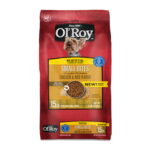 Ol' RoyOl’ Roy Complete Nutrition Small Bites Complete Nutrition Chicken and Rice Flavor Dry Dog Food
 WellnessWellness Core+ Beef & Barley Recipe Dry Dog Food
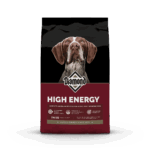 DiamondDiamond High Energy Adult Dry Dog Food
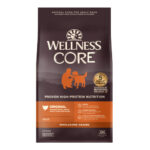 WellnessWellness Core Wholesome Grains Original Dry Dog Food
 DiamondDiamond Care Sensitive Skin Formula for Adult Dogs Grain-Free Dry Dog Food
 Royal CaninRoyal Canin X-Small Weight Care Dry Dog Food
Checked against the ingredient list we store for each food. Labels change, so read the bag before you buy.
Sources
What we read
Checked October 1, 2026.
- 1 Safety of a feed additive consisting of indigo carmine for cats, dogs and ornamental fish (Sensient Colors Europe GmbH)
- 2 Color vision in the dog
- 3 Consumer Acceptance of Dry Dog Food Variations
- 4 145. Indigotine (FAO Nutrition Meetings Report Series 46a)
- 5 21 CFR 74.102: FD&C Blue No. 2
- 6 GFI #223 Small Entity Compliance Guide Declaring Color Additives In Animal Foods
- 7 Visual purchasing: how to use color to appeal to pets and owners
- 8 21 CFR 501.4: Food; designation of ingredients