
Ingredient file // Flavor
Bone Broth
Flavored water for toppers, not a joint remedy
Bone broth is water that bones, cartilage and scraps were simmered in for hours, then strained. For a dog it adds flavor and moisture to a meal. The collagen, mineral and gut claims rest on amounts far too small to matter.
Role in the food Mostly filler- What it is
- Water that animal bones and connective tissue were simmered in for hours, then strained. The label does not name the species.
- Made from
- Animal bones, cartilage and water, often with vinegar
- Main job
- Moisture and flavor in toppers
- Typical amount
- Not published
- Watch for
- Unnamed species, a problem for allergy elimination diets
- Not the same as
- Collagen peptide supplements
Straight answer
Is Bone Broth safe for dogs?
Use it for flavor, not for health
On a topper, broth listed first just means the product is mostly liquid. Judge it by what follows: a named meat, and no onion or garlic. Pour it on to tempt a picky eater, and buy a tested joint supplement if joints are the worry.
- Why it is in the food
- Moisture and flavor in toppers
- How common
- Listed by 1 of the 3,205 foods we track
Our read // In our catalog
In 1 of every 3,205 foods we track
Share of foods that list it
<1%
1 of the 3,205 foods with an ingredient list on file, from 1 brand. All dry dog food.
Each square is 1% of the catalog
Where it sits on the label
Median position 6. In the top five of 0 foods, so it is usually a supporting ingredient.
Above the salt
Almost always listed before the salt, so there is more of it than a pinch.
Who leans on it
100%
of the foods that list it are from Fromm. 1 brand use it in total.
What it is
How it is made
Bone broth starts with the bones and trimmings the meat industry has left over. Simmering pulls gelatin, amino acids and a little mineral into the water, and a longer cook with some acid pulls out more.1,4
- 01 // Source Bones and cartilage Beef, chicken or turkey bones with cartilage attached. One lab recipe cut beef femurs into 100 to 130 g pieces.
- 02 // Process Simmered with vinegar The lab recipe used 20 mL of white vinegar per liter of water and held it at about 100 °C for 8 hours.
- 03 // Process Time and acid Cooking past 8 hours, or dropping the pH from 8.38 to 5.32, pulls far more calcium and magnesium from bone.
- 04 // Process Strained Bones and solids are strained off. Only the liquid that passes through becomes the broth.
- 05 // Output Liquid broth A thin liquid with about 333 mg of solids per 100 mL, poured into toppers and wet foods.
What is in it
Composition, dry matter
333
mg/100 mL
Solids per 100 mL of a lab broth simmered 8 hours. Over 99% of the broth is water, so any benefit rides on a third of a gram.
Why it is in the bag
Mostly there for the label, not nutrition
- Main nutrition
- Supporting nutrient
- Does a job
- Mostly filler
In kibble, broth likely stands in for part of the water that mixes the dough, and that water is driven off in drying. Broth is about a third of a gram of solids per 100 mL, so what stays behind is likely too little to change the food's nutrition. Dogs have taste receptors for proline, which broth carries, but no study we found tests whether this trace adds flavor. The clear job is a meaty name on the list.1,8,9
-
01
Makes food more appealing
Dogs have taste receptors for amino acids such as proline, which broth carries, and kibble palatability work found dogs preferred higher moisture. Flavor is the real job.1,8
-
02
Adds water to the bowl
It is mostly water, and water in food counts toward intake. In a 10-dog crossover, a 71% moisture diet added 88 g of total water a day over kibble.7
-
03
Doubles as the processing liquid
Wet foods need added liquid to process, and ingredients are listed by weight. Using broth for that liquid puts a named, appealing ingredient at the top of the list.9
How much No dog trial has fed bone broth itself. The one collagen joint trial in dogs used about 240 mg of collagen peptides per kg daily.5
Our read // The claims
What the evidence supports
Strong: controlled studies in dogs agree. Some: small or mixed dog data. Thin: mechanism or lab work only. None: nothing, or the evidence points the other way.
-
Brands say
Bone broth keeps dogs hydrated
Outruns the evidence
Evidence
- Strong
- Some
- Thin
- None
Food moisture counts. In a 10-dog crossover funded by a fresh food brand, a wetter diet added 88 g of water a day, but kibble-fed dogs already met 102% of their need. Healthy dogs with water are not short.7
-
Owners say
Dogs love it poured on their food
Outruns the evidence
Evidence
- Strong
- Some
- Thin
- None
No trial has fed dogs broth to test it. The support is indirect: dogs have taste receptors that respond to proline, which broth carries, and kibble palatability work found higher moisture preferred. The rest is owner observation.1,8
-
Brands say
Collagen in bone broth supports joints
Outruns the evidence
Evidence
- Strong
- Some
- Thin
- None
A 12-week, 31-dog trial funded by a collagen maker helped arthritic dogs at about 240 mg of collagen peptides per kg daily. At 248 mg of protein per 100 mL, a 20 kg dog would need almost 2 liters of broth.1,5,6
-
Brands say
Bone broth heals the gut
Outruns the evidence
Evidence
- Strong
- Some
- Thin
- None
The support is one mouse study: 24 mice drank broth freely for 10 days before chemically induced colitis, and treated mice showed less tissue damage. No dog has been tested, and a drizzle on kibble is not that dose.1
-
Brands say
A natural source of calcium and minerals
Outruns the evidence
Evidence
- Strong
- Some
- Thin
- None
Tested broths fall short. A lab beef broth held 6.4 mg of calcium per 100 mL, and a 2017 study found home and commercial broths supplied under 5% of daily recommended calcium and magnesium per serving.1,4
Straight answers
What owners ask
-
Q01
Is it just filler?
Mostly waterNutritionally it is close to water, with about a third of a gram of solids per 100 mL. In a topper that is the job: flavor and moisture. It is not a protein or mineral source.1
-
Q02
Can a broth topper replace a meal?
NoProducts that do not meet complete nutrition standards must say they are for intermittent or supplemental feeding only. Broth adds almost no calories or nutrients, so it belongs on top of a complete food.9
-
Q03
Can I use broth from the grocery store?
Check for onionMany kitchen broths add onion or garlic, and cooking does not make them safe. Garlic is 3 to 5 times more toxic than onion. A plain, unseasoned broth is fine as an occasional extra.10
Who uses it
Brands, best sellers and the company it keeps
Top brands, by foods that list it
Foods that list it / all the brand's recipes we track.
Usually listed with, share of the foods that list it
- Chicken 100%
- Chicken Meal 100%
- Whole Oats 100%
- Whole Barley 100%
- Brown Rice 100%
- Organic Sorghum 100%
- Dried Yeast 100%
- Salmon Meal 100%
- Salmon Oil 100%
- Mixed Tocopherols 100%
On the shelf
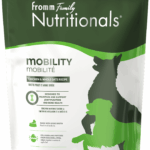
Foods that list Bone Broth
1 food in our catalog lists it, highest on the label first.
Sources
What we read
Checked October 1, 2026.
- 1 Analysis of the Anti-Inflammatory Capacity of Bone Broth in a Murine Model of Ulcerative Colitis
- 2 Bone Broth Unlikely to Provide Reliable Concentrations of Collagen Precursors Compared With Supplemental Sources of Collagen Used in Collagen Research
- 3 The risk of lead contamination in bone broth diets
- 4 Essential and toxic metals in animal bone broths
- 5 The oral intake of specific Bioactive Collagen Peptides (BCP) improves gait and quality of life in canine osteoarthritis patients: A translational large animal model for a nutritional therapy option
- 6 Collagen Hydrolysates as Nutritional Support in Canine Osteoarthritis: A Narrative Review
- 7 Feeding fresh food and providing water ad libitum is clinically proven to exceed calculated daily water requirements and impact urine relative supersaturation in dogs
- 8 Insights to Study, Understand and Manage Extruded Dry Pet Food Palatability
- 9 Reading Labels
- 10 Garlic and Onion (Allium spp) Toxicosis in Animals