
Ingredient file // Starch
Cassava Flour
A useful starch without a health upgrade
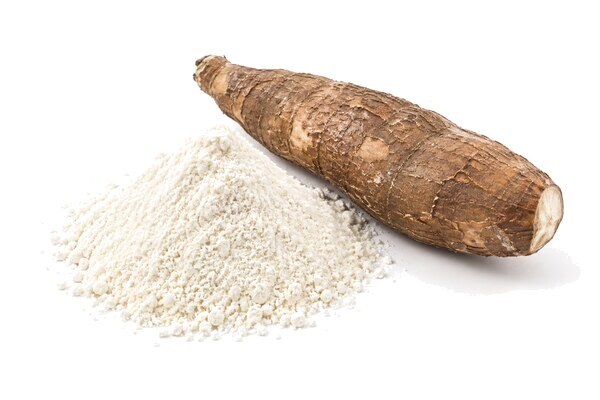
Cassava flour is dried, milled cassava root. In kibble, its starch supplies energy and helps form the pieces. Dogs digest it well after extrusion, but it contributes little protein and gives a grain-free food no proven health advantage.
- What it is
- Flour made by drying and milling cassava root rather than extracting its starch alone.
- Made from
- Cassava roots
- Main job
- Starch for energy and structure
- Typical amount
- Not published
- Watch for
- Poor processing can leave cyanide compounds
- Not the same as
- Tapioca starch
Straight answer
Is Cassava Flour safe for dogs?
Read cassava flour as the starch source
If cassava flour sits near the top of the list, it supplies a substantial share of the recipe's starch. Look at the other major ingredients to see what supplies protein. Choose the complete food for its nutritional adequacy and your dog's needs, not for its grain-free label.
- Why it is in the food
- Starch for energy and structure
- How common
- Listed by 20 of the 3,205 foods we track
Our read // In our catalog
In 1 of every 160 foods we track
Share of foods that list it
<1%
20 of the 3,205 foods with an ingredient list on file, from 3 brands. 18 dry dog food, 2 wet dog food.
Each square is 1% of the catalog
Where it sits on the label
Median position 4. In the top five of 17 foods, so it is usually a main ingredient.
Above the salt
Almost always listed before the salt, so there is more of it than a pinch.
Price per lb
Median of the cheapest bag price across 14 priced foods, 50% above the catalog. The price is the food's, not the ingredient's.
Who leans on it
50%
of the foods that list it are from Natural Balance. 3 brands use it in total.
What it is
How it is made
Cassava roots spoil quickly after harvest. Processors make flour to preserve the crop and reduce shipping costs. Removing the peel, pressing grated root and drying it also reduce naturally occurring cyanide compounds.5,6
- 01 // Source Fresh cassava roots Processors select freshly harvested roots with substantial starch and low levels of cyanide compounds.
- 02 // Process Peeled and washed The peel is removed before the roots are washed; it holds much of the cyanide compounds.
- 03 // Process Grated and pressed Processors grate the root into mash, then press out liquid before the mash is dried.
- 04 // Process Dried and milled The pressed material is dried, milled and screened into flour that stores longer than fresh roots.
- 05 // Output Cassava flour The dry, milled root arrives as a starch ingredient for mixing into kibble dough.
What is in it
Composition, dry matter
80
% starch
The average for dehydrated cassava root. Flour chiefly supplies energy, leaving the recipe dependent on other ingredients for protein.
Why it is in the bag
What the manufacturer gets
-
01
Supplies digestible energy
Extrusion cooks the starch. In a controlled dog trial, the cassava flour diet had high starch digestibility and supplied energy much like the rice diet.1
-
02
Helps form kibble
Moist heat and pressure transform starch into the dough structure that lets kibble expand. Cassava flour supplies starch for that processing job.7
-
03
Replaces cereal starch
Flour gives manufacturers a starch source for grain-free recipes. Drying also makes a perishable crop easier to store and cheaper to transport from growing areas.5,6
-
04
Provides starch at scale
Cassava flour is made with equipment ranging from small presses and dryers to automated plants, giving manufacturers a supply beyond fresh, quickly spoiling roots.6
How much One extruded dog trial used 42.49% cassava flour by recipe weight; that experimental level does not show a usual amount.1
Our read // The claims
What the evidence supports
Strong: controlled studies in dogs agree. Some: small or mixed dog data. Thin: mechanism or lab work only. None: nothing, or the evidence points the other way.
-
Brands say
Cassava flour gives dogs easily digested energy
Evidence
- Strong
- Some
- Thin
- None
In a 36-dog trial with 6 dogs per diet, starch in the extruded cassava flour diet was 99.4% digested. That supports digestible energy once cooked. The trial measured digestion and blood response only, and shows no health advantage over rice.1
-
Brands say
Cassava flour is safe for food allergies
Outruns the evidence
Evidence
- Strong
- Some
- Thin
- None
Dehydrated cassava root averages 2.9% protein, and an allergy review identified other foods as common triggers. Neither finding tests cassava in allergic dogs. The complete recipe still needs to be assessed through an elimination diet.4,9
-
Brands say
Cassava flour keeps blood sugar steady
Outruns the evidence
Evidence
- Strong
- Some
- Thin
- None
In a 36-dog trial comparing six starch diets, cassava flour produced one of the higher early glucose and insulin responses, grouped with rice and corn, while sorghum, lentils and peas rose more later. That is the opposite of a steady blood sugar claim.1
-
Owners say
Cassava flour is poisonous in kibble
Outruns the evidence
Evidence
- Strong
- Some
- Thin
- None
In a 14-week dog study, a gari-heavy diet expected to release 10.8 mg cyanide per kg of cooked food damaged tissues. That exposure was not measured in commercial kibble, so it cannot justify a blanket claim about cassava flour.3,5,6
-
Critics say
Cassava flour is just filler
Outruns the evidence
Evidence
- Strong
- Some
- Thin
- None
Dehydrated cassava root averages about 80% starch, which supplies calories and helps form kibble. It has a defined job. Its limitation is low protein, which other ingredients in the recipe must supply.4,7
Straight answers
What owners ask
-
Q01
Is it just filler?
NoCassava flour supplies digestible starch and helps form kibble. It contributes little protein. If it sits high on the ingredient list, look to the other major ingredients for the food's protein.1,4,7,8
-
Q02
Is it the same as tapioca?
NoTapioca is starch extracted from cassava. Cassava flour is dried, milled root tissue, so it retains some fiber and protein. Both chiefly supply starch in dog food.4,5,6
-
Q03
Does grain-free mean healthier?
No proofCassava replaces grain starch, but that swap alone says nothing about the complete diet. In a dog comparison, cassava and rice diets both digested well. Check which major ingredients supply protein.1,8
Who uses it
Brands, best sellers and the company it keeps
Top brands, by foods that list it
Foods that list it / all the brand's recipes we track.
Amazon best sellers that list it
Rank on Amazon's dog food best seller list, checked October 2026.
Usually listed with, share of the foods that list it
- Brewers Dried Yeast 70%
- Mixed Tocopherols 60%
- Natural Flavor 45%
- Potatoes 45%
- Sweet Potatoes 45%
- Flaxseed 45%
- Dried Egg Product 40%
- Pea Fiber 40%
- Potato Protein 35%
- Chicken 30%
- Chicken Fat 25%
- Duck 25%
On the shelf
Foods that list Cassava Flour
20 foods in our catalog list it, highest on the label first.
 Natural BalanceNatural Balance L.I.D. Limited Ingredient Diets Grain-Free Salmon & Sweet Potato Dry Dog Food
 INABAInaba Churu Meal in Gravy Chicken Recipe with Vegetables Grain-Free Wet Dog Food
 INABAInaba Churu Meal in Gravy Chicken Recipe with Vegetables & Beef Grain-Free Wet Dog Food
 Natural BalanceNatural Balance Zen Life Dry Dog Food
 Natural BalanceNatural Balance L.I.D. Limited Ingredient Diets Grain-Free Salmon & Sweet Potato Small Breed Bites Dry Dog Food
 LotusLotus Oven Baked Small Bites Duck Recipe Grain-Free Dry Dog Food
 LotusLotus Oven Baked Regular Bites Duck Recipe Grain-Free Dry Dog Food
 Natural BalanceNatural Balance Gentle Balance Dry Dog Food
Show 12 more
 Natural BalanceNatural Balance L.I.D. Limited Ingredient Diets Grain-Free Duck & Potato Small Breed Bites Dry Dog Food
 Natural BalanceNatural Balance L.I.D. Limited Ingredient Diets Grain-Free Chicken & Sweet Potato Small Breed Bites Dry Dog Food
 Natural BalanceNatural Balance L.I.D. Limited Ingredient Diets Grain-Free Chicken & Sweet Potato Dry Dog Food
 Natural BalanceNatural Balance L.I.D. Limited Ingredient Diets Grain-Free Duck & Potato Dry Dog Food
 Natural BalanceNatural Balance L.I.D. Limited Ingredient Diets Grain-Free Duck & Potato Dry Puppy Dry Dog Food
 LotusLotus Oven Baked Small Bites Lamb Recipe Grain-Free Dry Dog Food
 LotusLotus Oven Baked Small Bites Turkey Recipe Grain-Free Dry Dog Food
 LotusLotus Oven Baked Regular Bites Lamb Recipe Grain-Free Dry Dog Food
 LotusLotus Oven Baked Regular Bites Turkey Recipe Grain-Free Dry Dog Food
 LotusLotus Oven Baked Small Bites Sardine Recipe Grain-Free Dry Dog Food
 LotusLotus Oven Baked Regular Bites Sardine Recipe Grain-Free Dry Dog Food
 Natural BalanceNatural Balance On The Move Dry Dog Food
Sources
What we read
Checked October 1, 2026.
- 1 Effects of six carbohydrate sources on dog diet digestibility and post-prandial glucose and insulin response
- 2 Digestibility of sun dried cassava chips in dogs
- 3 Pathological changes in growing dogs fed on a balanced cassava (Manihot esculenta Crantz) diet
- 4 Cassava tubers, dehydrated
- 5 Cassava roots
- 6 High quality cassava flour and industrial starches
- 7 Extrusion Processing Modifications of a Dog Kibble at Large Scale Alter Levels of Starch Available to Animal Enzymatic Digestion
- 8 What's in the Ingredients List?
- 9 Critically appraised topic on adverse food reactions of companion animals (2): common food allergen sources in dogs and cats