
Ingredient file // Flavor
Chicken Fat Broth
Chicken flavor and fat, not a health tonic
Chicken fat broth is chicken cooked in water with its fat kept in, mixed into the dough or coated on the kibble. It adds a flavor dogs like and fat calories. The hydration and gut-healing stories outrun the evidence.
- What it is
- Chicken simmered in water, with the chicken fat kept in, used as a liquid source of flavor and fat.
- Made from
- Chicken parts and bones cooked in water, plus chicken fat
- Main job
- Flavor and fat calories
- Typical amount
- Not published; fat coatings tested at 3 to 9%
- Watch for
- Extra fat for dogs with chronic pancreatitis
- Not the same as
- Plain chicken fat or bone broth
Straight answer
Is Chicken Fat Broth safe for dogs?
Read it as flavor, then check the fat
Broth is weighed wet, so its place on the list overstates what survives drying. Judge the food by the named protein above it and by the guaranteed fat. For most dogs it is a harmless flavor. For a dog with chronic pancreatitis, the fat figure matters more than the name.
- Why it is in the food
- Flavor and fat calories
- How common
- Listed by 1 of the 3,205 foods we track
Our read // In our catalog
In 1 of every 3,205 foods we track
Share of foods that list it
<1%
1 of the 3,205 foods with an ingredient list on file, from 1 brand. All dry dog food.
Each square is 1% of the catalog
Where it sits on the label
Median position 5. In the top five of 1 food, so it is usually a main ingredient.
Who leans on it
100%
of the foods that list it are from Wysong. 1 brand use it in total.
What it is
How it is made
Broth is the liquid left after chicken and bones simmer in water. Chicken fat comes from rendering, where fat is drawn off so poultry meals do not go rancid. Kibble plants add the mix as a liquid.1,3,11
- 01 // Source Chicken and water Chicken and bones simmer in water. Home-made chicken stock is about 92% water and 1.2% fat.
- 02 // Process Fat drawn off Rendering separates fat from cooked poultry, because meals above 16% fat tend to go rancid in storage.
- 03 // Process Into the dough Wet ingredients join the dry mix with water and steam in a preconditioner, which forms the dough.
- 04 // Process Dried Kibble is dried after extrusion to cut moisture and prevent spoilage, and the broth's water goes with it.
- 05 // Output Flavor in the kibble What stays is chicken protein, fat and flavor, sometimes sprayed on as a coating after drying.
What is in it
Composition, dry matter
8
% solids
Home-made chicken stock is about 92% water, so only about 8% is solids. The ingredient list weighs broth wet, water included.
Why it is in the bag
What the manufacturer gets
-
01
Dogs eat it readily
Fat and meat flavor drive kibble acceptance. In an industry preference test, dogs chose kibble coated with 9% fat over 3%. Bacon fat and beef tallow were the favorites, not chicken fat.4
-
02
Concentrated calories
Chicken fat carries 900 kcal per 100 g, more than twice what protein or starch supplies, so a little raises the energy in each cup.2
-
03
Liquid for the dough
Extrusion needs water and wet ingredients to hydrate the dry mix. Broth does that job and adds chicken flavor that plain water would not.3
-
04
Supplies linoleic acid
About 19.5% of chicken fat is linoleic acid, an essential fat for skin. Soy oil raised skin linoleic acid in dogs more than poultry fat did.2,5
How much No recipe share is published; in industry palatability tests, chicken fat and four other fats were coated onto kibble at 3% and 9%.4
Our read // The claims
What the evidence supports
Strong: controlled studies in dogs agree. Some: small or mixed dog data. Thin: mechanism or lab work only. None: nothing, or the evidence points the other way.
-
Critics say
Broth is mostly water that pads the ingredient list
Evidence
- Strong
- Some
- Thin
- None
Ingredients are ranked by weight. A home-made chicken stock tests at about 92% water, and no analysis of the pet-food version is published. Kibble is dried, so the broth's place on the list overstates what stays, by an amount no label shows.1,3,10
-
Brands say
Chicken fat broth makes the food taste better
Evidence
- Strong
- Some
- Thin
- None
Industry-run tests, 20 dogs over 2 days per pairing, found dogs favored 9% fat coatings over 3%. Bacon fat and beef tallow ranked highest; chicken fat was not a top choice. With no zero-fat control, the trial cannot show chicken fat improving taste.4
-
Brands say
Chicken fat gives dogs a shiny coat
Outruns the evidence
Evidence
- Strong
- Some
- Thin
- None
The evidence is indirect. An 8-dog, 24-week pilot raised linoleic acid and zinc together and cut skin water loss by about 8 g/m2/h. Dogs fed poultry fat had less skin linoleic acid than dogs fed soy oil. Neither study measured coat shine.5,6
-
Brands say
Broth heals the gut and supports joints
Outruns the evidence
Evidence
- Strong
- Some
- Thin
- None
The support is lab and rodent work on glycine and gelatin. A 2022 review by a canine nutritionist found no conclusive research in dogs or cats, and no trial has tested broth inside a kibble.7
-
Owners say
Broth in kibble keeps dogs hydrated
Outruns the evidence
Evidence
- Strong
- Some
- Thin
- None
Kibble is dried after extrusion precisely to lower its moisture and stop spoilage, so the broth's water is what the dryer targets. No study shows broth in a dry food changing a dog's water intake.1,3
Straight answers
What owners ask
-
Q01
Is it just filler?
NoIt has two jobs: chicken flavor that gets kibble eaten, and fat at 900 kcal per 100 g. It adds little dry weight, but what remains is protein, fat and flavor.1,2,4
-
Q02
Is it the same as bone broth?
Not necessarilyThe label term does not say how long bones simmered or how much collagen made it in. Either way, no study shows broth in dog food helping joints or the gut.7
-
Q03
Is chicken fat a good fat?
Yes, a standard oneIt is about 45% monounsaturated and 19.5% linoleic acid, an essential fat. Soy oil supplies more linoleic acid; chicken fat adds meat flavor and calories, nothing magic.2,5
Who uses it
Brands, best sellers and the company it keeps
Top brands, by foods that list it
Foods that list it / all the brand's recipes we track.
Usually listed with, share of the foods that list it
- Chicken Meal 100%
- Brown Rice 100%
- Chicken 100%
- Medium Chain Triglyceride Oil 100%
- Minerals 100%
- Potassium Chloride 100%
- Zinc Proteinate 100%
- Zinc Sulfate 100%
- Ferrous Sulfate 100%
- Iron Proteinate 100%
- Copper Sulfate 100%
- Copper Proteinate 100%
On the shelf
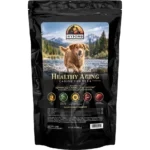
Foods that list Chicken Fat Broth
1 food in our catalog lists it, highest on the label first.
Sources
What we read
Checked October 1, 2026.
- 1 Soup, stock, chicken, home-prepared (SR Legacy 172884)
- 2 Fat, chicken (SR Legacy 173564)
- 3 How dry pet food is made
- 4 Fat Type and Amount: Its Impact on Palatability
- 5 Effects of animal and soy fats and proteins in the diet on fatty acid concentrations in the serum and skin of dogs
- 6 Evidence for an interaction between linoleic acid intake and skin barrier properties in healthy dogs: a pilot study
- 7 Can bone broth live up to the expectations?
- 8 Associations between dietary factors and pancreatitis in dogs
- 9 Pancreatitis in Dogs
- 10 What's in the Ingredients List?
- 11 Poultry by-product meal