
Ingredient file // Animal protein
Hydrolyzed Chicken
Well-digested chicken protein, not an allergy fix
Hydrolyzed chicken is chicken protein that enzymes have cut into short pieces and dried to a powder. Dogs use it about as well as chicken meal, but a dog allergic to chicken still reacts to it in some cases.
- What it is
- Chicken protein cut into short peptides by enzymes, with the fat and bone removed, then dried to a powder.
- Made from
- Chicken meat, mechanically separated chicken, or giblets
- Main job
- Digestible chicken protein
- Typical amount
- Not published for retail food; dog trials fed 5 to 25%
- Watch for
- Still chicken to a chicken-allergic dog
- Not the same as
- A prescription hydrolyzed diet
Straight answer
Is Hydrolyzed Chicken safe for dogs?
Count it as chicken, not as hypoallergenic
Read hydrolyzed chicken as a chicken protein, on par with chicken meal. Then check what sits beside it. If chicken meal or other poultry appears in the same list, the food is not an allergy diet. For a dog with a proven chicken allergy, run a vet-led elimination trial; in one 10-dog trial, an extensively hydrolyzed feather diet caused no flares.
- Why it is in the food
- Digestible chicken protein
- How common
- Listed by 2 of the 3,205 foods we track
Our read // In our catalog
In 1 of every 1,603 foods we track
Share of foods that list it
<1%
2 of the 3,205 foods with an ingredient list on file, from 2 brands. All dry dog food.
Each square is 1% of the catalog
Where it sits on the label
Median position 2. In the top five of 2 foods, so it is usually a main ingredient.
Above the salt
Almost always listed before the salt, so there is more of it than a pinch.
Price per lb
Median of the cheapest bag price across 2 priced foods, 35% above the catalog. The price is the food's, not the ingredient's.
Who leans on it
50%
of the foods that list it are from Fromm. 2 brands use it in total.
What it is
How it is made
Hydrolysis is how processors turn chicken trimmings and by-products into a soluble protein powder. Enzymes do the cutting, then the fat and bone are spun off so the protein dries on its own.8,9,10,11
- 01 // Source Chicken raw material Suppliers start from chicken meat, mechanically separated chicken, or guts and giblets, depending on the product.
- 02 // Process Enzyme digestion The ground material is held with a protease enzyme, in one published protocol for 2 hours at 65°C.
- 03 // Process Enzyme stopped, split Heating to 90°C for 20 minutes stops the enzyme. A centrifuge then separates protein broth from fat and bone.
- 04 // Process Dried The protein broth is dried to a powder. One spray-drying study used air entering at 160°C.
- 05 // Output Hydrolyzed chicken A soluble powder. One supplier specifies at least 75% protein and about 15% free amino acids.
What is in it
Composition, dry matter
79-86
% protein
Protein on a dry basis in poultry hydrolysates made from bone-rich by-products. Most of the fat and bone mineral is spun off, so what remains is nearly all protein.
Why it is in the bag
What the manufacturer gets
-
01
Fully usable chicken protein
In a rooster assay every essential amino acid in chicken hydrolysate was over 80% digestible, and it had no limiting amino acid against the AAFCO adult dog profile.3
-
02
Allergy positioning
Cutting proteins into short peptides hides the sites that allergy antibodies grab. Only extensive hydrolysis removed recognition entirely. A partial hydrolysate was still recognized by 37% of sensitized dogs.2
-
03
Flavor from free amino acids
Hydrolysis frees amino acids and small peptides. One supplier's product carries about 15% free amino acids, which the supplier sells as a taste draw for dogs.9
-
04
Turns by-products into protein
Poultry processors have to dispose of bone-rich by-products. Hydrolysis recovers their protein, and reusing the enzyme broth up to 3 times cuts the enzyme cost.8
How much A 10-Beagle trial fed chicken hydrolysate at 5% and 25% of the diet for 28 days, and the dogs accepted every diet.4
Our read // The claims
What the evidence supports
Strong: controlled studies in dogs agree. Some: small or mixed dog data. Thin: mechanism or lab work only. None: nothing, or the evidence points the other way.
-
Brands say
Hydrolysis removes the chicken allergen
Outruns the evidence
Evidence
- Strong
- Some
- Thin
- None
Only deep hydrolysis does. IgE from chicken-sensitized dogs recognized chicken meal in 73% of cases, a partly hydrolyzed poultry extract in 37% and an extensively hydrolyzed one in 0%. An ingredient list never says which kind you are getting.2
-
Brands say
Dogs find it tastier
Outruns the evidence
Evidence
- Strong
- Some
- Thin
- None
A supplier reports that dogs preferred a diet with 30% chicken hydrolysate in a two-bowl test, but that test is unpublished. In the peer-reviewed 10-Beagle trial, the chicken meal diet was accepted just as well.4,9
-
Brands say
More digestible protein than chicken meal
Outruns the evidence
Evidence
- Strong
- Some
- Thin
- None
In a rooster assay every essential amino acid in chicken hydrolysate was over 80% digestible, with no difference from chicken meal. It scored higher only for amino acid balance, which is not digestibility. Kemin, the supplier, co-authored the work.3
-
Brands say
Supports gut health and immunity
Outruns the evidence
Evidence
- Strong
- Some
- Thin
- None
In a 10-Beagle Latin square trial, 25% chicken hydrolysate matched chicken meal on blood cytokines, oxidative stress and skin and coat. Fecal IgA was higher than on liver and heart hydrolysate but no different from the control. No health benefit was shown.4
-
Owners say
Safe for dogs allergic to chicken
Outruns the evidence
Evidence
- Strong
- Some
- Thin
- None
In a double-blind crossover of 10 chicken-allergic dogs, a hydrolyzed chicken liver diet set off itch flares in 4, while a hydrolyzed feather diet set off none. Royal Canin, which makes the feather diet, funded the trial.1
Straight answers
What owners ask
-
Q01
Is it just filler?
NoIt is chicken protein with most of the fat and bone mineral spun off. Lab-made poultry hydrolysates ran 79 to 86% protein on a dry basis, and in feeding work it matched chicken meal for digestibility.3,8
-
Q02
Can a chicken-allergic dog eat it?
Not reliablyHydrolysis does not reliably hide chicken: 4 of 10 chicken-allergic dogs flared on a hydrolyzed chicken liver diet, while 6 did not. If the same bag also lists chicken meal or other poultry, it is ordinary chicken food.1
-
Q03
Is this the same as a vet hydrolyzed diet?
NoPrescription hydrolyzed diets exist for elimination trials and bowel disease, and the whole recipe is designed to remove allergens. Even so, up to 50% of allergic dogs in 3 controlled studies reacted to partial hydrolysates of their trigger food.6,7
Who uses it
Brands, best sellers and the company it keeps
Top brands, by foods that list it
Foods that list it / all the brand's recipes we track.
Usually listed with, share of the foods that list it
- Hydrolyzed Chicken Liver 100%
- Chicken Meal 50%
- Oatmeal 50%
- Pearled Barley 50%
- White Rice 50%
- Brown Rice 50%
- Dried Plain Beet Pulp 50%
- Menhaden Fish Meal 50%
- Pumpkin 50%
- Corn Starch 50%
- Ground Pecan Shells 50%
- Powdered Cellulose 50%
On the shelf
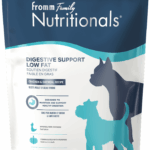
Foods that list Hydrolyzed Chicken
2 foods in our catalog list it, highest on the label first.

Sources
What we read
Checked October 1, 2026.
- 1 A randomized, double-blinded crossover trial testing the benefit of two hydrolysed poultry-based commercial diets for dogs with spontaneous pruritic chicken allergy
- 2 Extensive protein hydrolyzation is indispensable to prevent IgE-mediated poultry allergen recognition in dogs and cats
- 3 Standardized amino acid digestibility and protein quality in extruded canine diets containing hydrolyzed protein using a precision-fed rooster assay
- 4 The effects of hydrolyzed protein on macronutrient digestibility, fecal metabolites and microbiota, oxidative stress and inflammatory biomarkers, and skin and coat quality in adult dogs
- 5 Hydrolyzed diets may stimulate food-reactive lymphocytes in dogs
- 6 A systematic review of the evidence of reduced allergenicity and clinical benefit of food hydrolysates in dogs with cutaneous adverse food reactions
- 7 Hydrolyzed protein diets for dogs and cats
- 8 Exploitation of bones-rich poultry by-products to produce protein hydrolysates: optimization of hydrolysis parameters and chemical characterization
- 9 BioActio in the development of pet food
- 10 Biological evaluation of mechanically deboned chicken meat protein hydrolysate
- 11 The effects of chicken hydrolyzed proteins in extruded diets on plasma and fecal metabolic profiles in adult dogs