
Ingredient file // Starch
Pasta
Useful starch, with no special health benefit
Pasta is shaped dough, usually made from wheat, that is cooked into some dog foods. It mainly supplies starch for energy, plus some protein. Its place on the ingredient list tells you more than the pasta shape does.
Role in the food Main nutrition- What it is
- Shaped dough made from flour and liquid, then dried or cooked; conventional pasta usually contains wheat.
- Made from
- Usually wheat flour or semolina and water
- Main job
- Starch for energy
- Typical amount
- Not published
- Watch for
- A diagnosed wheat or egg reaction
- Not the same as
- Wheat gluten
Straight answer
Is Pasta safe for dogs?
Read the whole recipe around the pasta
Pasta near the end of a list is a small starch addition. Higher up, it contributes more of the recipe, though the label gives no percentage. Check the named protein sources, the nutritional adequacy statement and the calories. Verify what the pasta contains if your dog has a proven wheat or egg reaction.
- Why it is in the food
- Starch for energy
- Watch for
- Dogs with wheat or egg reactions
- How common
- Listed by 5 of the 3,205 foods we track
Our read // In our catalog
In 1 of every 641 foods we track
Share of foods that list it
<1%
5 of the 3,205 foods with an ingredient list on file, from 3 brands. 4 wet dog food, 1 dog food topper.
Each square is 1% of the catalog
Where it sits on the label
Median position 6. In the top five of 2 foods, so it is usually a supporting ingredient.
Above the salt
Almost always listed before the salt, so there is more of it than a pinch.
Who leans on it
60%
of the foods that list it are from Purina. 3 brands use it in total.
What it is
How it is made
Pasta comes from food manufacturing and is a finished product, not necessarily a leftover. Makers mix wheat flour or semolina with water, sometimes add egg, shape the dough and dry it for storage before cooking.4,5
- 01 // Source Wheat semolina Milled durum wheat supplies the flour used in conventional pasta dough.
- 02 // Process Mixed into dough Semolina and water are mixed; some pasta recipes also include egg.
- 03 // Process Shaped and dried A press forms the dough into pasta, which is dried for storage and transport.
- 04 // Output Dry pasta The shaped, dried pasta is ready to be cooked into a dog food recipe.
What is in it
Composition, dry matter
63-69
% starch
Raw and cooked samples of one wheat-and-egg pasta were nearly two-thirds starch on a dry basis. Energy is its main contribution.
Why it is in the bag
A real starch energy source, not filler
- Main nutrition
- Supporting nutrient
- Does a job
- Mostly filler
Makers add pasta as a digestible starch that supplies energy alongside the meat, plus some wheat protein and visible pieces in wet food. Ingredients are listed by weight, so pasta in the first few names is likely the recipe's main starch; further down, behind meat, broth and vegetables, it is a smaller energy share. One wheat-and-egg pasta was about 63 to 69% starch dry, and a canine gut model digested 92 to 96% of pasta starch.2,4,5,7
-
01
Supplies starch energy
Pasta brings a substantial starch share to a recipe. A simulated canine digestive system broke down most starch from macaroni and spaghetti, though it did not measure energy absorbed by live dogs.2,4
-
02
Adds some plant protein
Wheat protein contributes to the food's protein total. Ordinary durum pasta is short on lysine and threonine, so it is a poor stand-alone protein source.4,6
-
03
Gives wet food texture
Shaping leaves recognizable pieces that a maker can cook into a wet recipe. The pieces change the food's appearance and texture, with no demonstrated health benefit from their shape.5
-
04
Uses existing pasta production
Pasta makers already press and dry shaped wheat dough, giving food makers a storable starch ingredient. Cost affects ingredient selection, but the sources show no pasta price advantage.5,8
How much A shelter study fed boiled wheat macaroni mixed equally with rice and served with beef; it did not report a commercial food inclusion rate.1
Our read // The claims
What the evidence supports
Strong: controlled studies in dogs agree. Some: small or mixed dog data. Thin: mechanism or lab work only. None: nothing, or the evidence points the other way.
-
Owners say
Wheat pasta causes allergies in dogs
Outruns the evidence
Evidence
- Strong
- Some
- Thin
- None
Wheat triggered reactions in 38 of 297 dogs selected for a review of food reactions. That supports avoiding wheat for a dog with a proven reaction, not assuming pasta causes allergy in every dog.3
-
Brands say
Pasta gives dogs useful energy
Evidence
- Strong
- Some
- Thin
- None
A simulated canine gut digested 96% of macaroni starch and 92% of spaghetti starch. A diet containing pasta was fed to 27 shelter dogs, but the study did not isolate pasta's energy contribution.1,2
-
Brands say
Pasta releases energy slowly
Outruns the evidence
Evidence
- Strong
- Some
- Thin
- None
In a laboratory study, cooked semolina pasta retained slowly digestible starch near or above 40% of available starch across drying conditions. The researchers did not feed it to dogs or measure their blood glucose.5
-
Critics say
Pasta is just filler
Outruns the evidence
Evidence
- Strong
- Some
- Thin
- None
One wheat-and-egg pasta contained about 63 to 69% starch on a dry basis, and a canine digestion model broke down most pasta starch. It supplies energy; the label cannot show its exact contribution to the recipe.2,4,7
Straight answers
What owners ask
-
Q01
Is it just filler?
NoPasta supplies starch that dogs can digest for energy, along with some protein. It does not make a complete meal by itself. Judge the finished food's nutritional adequacy and the ingredients around it.2,4,7
-
Q02
Does pasta always mean wheat?
UsuallyConventional pasta is made from wheat, but the word alone does not tell you which flour or other ingredients a manufacturer used. If your dog has a diagnosed food reaction, ask the maker for the pasta specification.4,5,7
-
Q03
How much pasta is in it?
Label won't sayIngredients appear in descending order by weight, but the list gives no percentages. Pasta high on the list signals a larger contribution than pasta near the end; neither position reveals its exact share.7
Who uses it
Brands, best sellers and the company it keeps
Top brands, by foods that list it
Foods that list it / all the brand's recipes we track.
Usually listed with, share of the foods that list it
- Chicken 80%
- Chicken Broth 60%
- Liver 40%
- Carrots 40%
- Wheat Flour 40%
- Egg Whites 40%
- Spinach 40%
- Beef 40%
- Vegetable Oil 40%
- Wheat Gluten 20%
- Meat By-Products 20%
- Corn Starch-Modified 20%
On the shelf
Foods that list Pasta
5 foods in our catalog list it, highest on the label first.
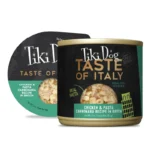 Tiki DogTiki Dog Taste of the World Chicken & Pasta Carbonara Recipe Wet Dog Food
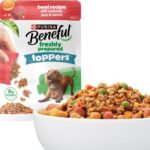 PurinaPurina Beneful (Freshly Prepared Toppers and Bone Broths) Beneful Freshly Prepared Toppers Beef Recipe Dog Food Topper
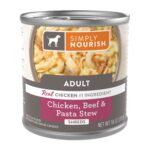 Simply NourishSimply Nourish Original - Shreds, Chicken, Beef & Pasta Stew Wet Dog Food
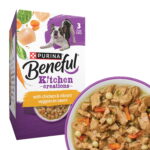 PurinaPurina Beneful Kitchen Creations Chicken & Veggies Wet Dog Food
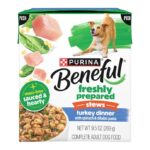 PurinaPurina Beneful Freshly Prepared Stews Turkey Dinner with Spinach and Ditalini Pasta in Gravy Wet Dog Food
Sources
What we read
Checked October 1, 2026.
- 1 Effect of different starch sources in a raw meat-based diet on fecal microbiome in dogs housed in a shelter
- 2 Nutrient metabolism: Starch and fiber fractions in selected food and feed ingredients affect their small intestinal digestibility and fermentability and their large bowel fermentability in vitro in a canine model
- 3 Critically appraised topic on adverse food reactions of companion animals (2): common food allergen sources in dogs and cats
- 4 Enhancing Nutritional Profile of Pasta: The Impact of Sprouted Pseudocereals and Cushuro on Digestibility and Health Potential
- 5 Impact of Raw Materials and Drying Temperatures on In Vitro Starch Digestibility of Durum Wheat Pasta
- 6 Amino Acid Composition of Protein-Enriched Dried Pasta: Is It Suitable for a Low-Carbohydrate Diet?
- 7 Reading Labels
- 8 Frequently Asked Questions