
Ingredient file // Preservative
Sodium Bisulfate
An acidifier with a narrow food safety job
Sodium bisulfate is a dry acid salt used to adjust pet food acidity. In kibble coating tests it reduced Salmonella counts. It supplies no meaningful protein, fat or calories, and its presence does not guarantee a germ-free bag.
- What it is
- A dry acid salt that lowers pH when it dissolves in moisture in food.
- Made from
- Salt and sulfuric acid
- Main job
- Food acidity control
- Typical amount
- Not published
- Watch for
- Total sodium in restricted diets
- Not the same as
- Sodium bisulfite
Straight answer
Is Sodium Bisulfate safe for dogs?
Judge the food, not the acid's name
Look at the foods listed ahead of sodium bisulfate, then check the nutritional adequacy statement. A late listing says only that it weighs less than those ahead of it; the bag does not give its dose. For sodium-restricted dogs, request the finished food's total sodium. Do not treat this ingredient as stone prevention or a Salmonella guarantee.
- Why it is in the food
- Food acidity control
- How common
- Listed by 2 of the 3,205 foods we track
Our read // In our catalog
In 1 of every 1,603 foods we track
Share of foods that list it
<1%
2 of the 3,205 foods with an ingredient list on file, from 1 brand. 1 wet dog food, 1 dry dog food.
Each square is 1% of the catalog
Where it sits on the label
Median position 16.5. In the top five of 0 foods, so it is usually a minor ingredient.
Above the salt
Listed before the salt in 50% of foods. In the rest it is under about 1% of the recipe.
Price per lb
Median of the cheapest bag price across 1 priced foods, 96% above the catalog. The price is the food's, not the ingredient's.
Who leans on it
100%
of the foods that list it are from Royal Canin. 1 brand use it in total.
What it is
How it is made
Chemical plants react salt with sulfuric acid to make sodium bisulfate. The reaction also gives off hydrogen chloride, which manufacturers capture as another saleable acid. The sodium bisulfate is formed into dry granules for feed production.7
- 01 // Source Salt and acid Manufacturers use sodium chloride and sulfuric acid as the starting materials.
- 02 // Process Heated reaction Heating the materials produces sodium bisulfate and hydrogen chloride gas.
- 03 // Process Gas captured The gas is dissolved in water to make hydrochloric acid, a separate product.
- 04 // Output Dry granules Liquid sodium bisulfate is sprayed and cooled into solid beads that dissolve in water.
What is in it
Composition, dry matter
19.1
% sodium
Sodium's share of the pure, dry compound. The ingredient adds sodium to a recipe, though its main job is acidity control.
Why it is in the bag
What the manufacturer gets
-
01
Controls food acidity
The salt releases acid when moisture dissolves it. Manufacturers use it to lower pH in pet food and coatings, where acidity can also limit bacterial growth.1,5,10
-
02
Reduces surface bacteria
Applied after extrusion, a coating puts the acid on kibble's surface. In inoculated dog food tests, coated samples had lower Salmonella counts than untreated samples.1
-
03
Cuts some acid costs
A supplier markets sodium bisulfate as less expensive than phosphoric acid for some uses. That is a supplier's cost claim, not an independently measured pet food saving.10
-
04
Acidifies coating fats
Fats are often added after kibble is cooked. In laboratory tests, sodium bisulfate reduced Salmonella in treated fats used for pet food coatings.4
How much A dog kibble coating experiment tested 0.2 and 0.4% sodium bisulfate; it did not report a usual recipe amount.1
Our read // The claims
What the evidence supports
Strong: controlled studies in dogs agree. Some: small or mixed dog data. Thin: mechanism or lab work only. None: nothing, or the evidence points the other way.
-
Brands say
Helps control Salmonella on dry kibble
Evidence
- Strong
- Some
- Thin
- None
In a supplier-linked experiment, dog kibble coated at 0.2 or 0.4% sodium bisulfate had significantly lower Salmonella counts than untreated kibble. That is a reduction, not a sterile bag.1
-
Brands say
Prevents urinary stones in dogs
Outruns the evidence
Evidence
- Strong
- Some
- Thin
- None
A 7-dog urinary trial tested complete diets and other supplements, without isolating sodium bisulfate. Regulators recognize the salt as a pet food acidifier, but acidity control alone does not show that it prevents stones in dogs.3,5
-
Brands say
Makes dry dog food taste better
Outruns the evidence
Evidence
- Strong
- Some
- Thin
- None
In a supplier-linked, 2-day preference test, 20 beagles showed no preference for kibble coated with sodium bisulfate over the control. That test does not support a claim that the ingredient improves taste.2
-
Owners say
It is toxic because it is used in pools
Outruns the evidence
Evidence
- Strong
- Some
- Thin
- None
A 2024 regulatory review found the additive safe under its assessed feed conditions. Concentrated sodium bisulfate irritates skin, eyes and airways, but that raw-material hazard does not describe a formulated dog food.5,6
Straight answers
What owners ask
-
Q01
Is it just filler?
NoIt supplies no meaningful protein, fat or calories. Its job is to change acidity, and a kibble coating experiment measured lower Salmonella counts with it. That is a processing function, not a nutritional benefit.1,7,9
-
Q02
Is it the same as bisulfite?
NoThe names differ by one letter, but they identify different salts. Sodium bisulfate is the acid salt used here for pH control. Sodium bisulfite is a separate compound, so evidence about one does not automatically apply to the other.7
-
Q03
Does it make the food sterile?
NoThe kibble abstract reports lower Salmonella counts. A separate laboratory study measured bacteria in treated coating fats. Neither shows that a finished retail bag remains free of Salmonella.1,4
-
Q04
How much is in this food?
Not shownAn ingredient list ranks components by weight but gives no percentages. Research coatings used 0.2 to 0.4% of dog food; those test doses do not reveal the amount in the bag you hold.1,8
Who uses it
Brands, best sellers and the company it keeps
Top brands, by foods that list it
Foods that list it / all the brand's recipes we track.
Usually listed with, share of the foods that list it
- Water Sufficient for Processing 50%
- Chicken 50%
- Chicken By-Product 50%
- Pork By-Products 50%
- Chicken Liver 50%
- Pork Liver 50%
- Wheat Flour 50%
- Pork Plasma 50%
- Powdered Cellulose 50%
- Brewers Rice 50%
- Corn 50%
- Chicken Fat 50%
On the shelf
Foods that list Sodium Bisulfate
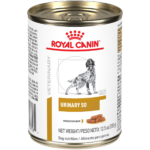
2 foods in our catalog list it, highest on the label first.

Sources
What we read
Checked October 25, 2026.
- 1 Effects of dry acidulant coating of commercial pet food on Salmonella contamination
- 2 Effect of a dry acidulant coating on the palatability of dry extruded dog food
- 3 Effects of two commercial diets and two supplements on urinary pH in dogs
- 4 Application of Acidulants to Control Salmonella spp. in Rendered Animal Fats and Oils with Different Levels of Unsaturation
- 5 Safety and efficacy of a feed additive consisting of sodium bisulphate for all animal species except aquatic animals (Grillo Werke AG & Jones-Hamilton Co.)
- 6 Safety Assessment on the Safety and Efficacy of a Feed Additive Consisting of Sodium Bisulphate for All Animal Species Except Aquatic Animals (RP1612)
- 7 Sodium Bisulfate: Livestock
- 8 Reading Labels
- 9 Sodium Bisulfate Chemical Information
- 10 About SBS Pet
- 11 Heart Disease - Nutrition