
Ingredient file // Fat or oil
Soy Oil
Useful fat, with an oversold coat claim
Soy oil is fat extracted from soybeans. It adds energy and linoleic acid, an essential fat dogs need in their diet. Dog studies show changes in skin fats, but do not show that soy oil improves a healthy dog's coat.
Role in the food Supporting nutrient- What it is
- Oil separated from soybeans, sometimes refined to remove gums, free fatty acids, color and odor.
- Made from
- Soybean seeds
- Main job
- Energy and linoleic acid
- Typical amount
- Not published
- Watch for
- Total fat in dogs needing restriction
- Not the same as
- Soybean meal
Straight answer
Is Soy Oil safe for dogs?
Judge the fat in the finished food
Soy oil on the list means added fat and linoleic acid. Its position shows weight relative to other ingredients, not how much is in the food. Check the finished food's fat on a dry matter basis and its nutritional adequacy statement. If your dog needs fat restriction, ask for fat per calorie.
- Why it is in the food
- Energy and linoleic acid
- How common
- Listed by 7 of the 3,205 foods we track
Our read // In our catalog
In 1 of every 458 foods we track
Share of foods that list it
<1%
7 of the 3,205 foods with an ingredient list on file, from 1 brand. All wet dog food.
Each square is 1% of the catalog
Where it sits on the label
Median position 8. In the top five of 2 foods, so it is usually a supporting ingredient.
Above the salt
Almost always listed before the salt, so there is more of it than a pinch.
Who leans on it
100%
of the foods that list it are from Cesar. 1 brand use it in total.
What it is
How it is made
Soybean processors separate oil from the beans and use the remaining flakes to make meal. Cleaning and flaking expose the oil for extraction. Crude oil may then be refined before it reaches a food plant.9,10
- 01 // Source Soybean seeds Beans enter a processing plant that separates their oil from the solids used to make meal.
- 02 // Process Cracked and flaked Rollers break and flatten the beans, exposing oil cells so the oil is easier to extract.
- 03 // Process Oil extracted Commercial plants commonly wash the flakes with hexane, then remove the solvent from both oil and flakes.
- 04 // Process Oil refined Refining, when used, removes gums, free fatty acids, color compounds and odors from the crude oil.
- 05 // Output Soy oil The liquid fat is shipped as a separate ingredient from the protein-rich soybean meal.
What is in it
Composition, dry matter
51
% linoleic
About half of the oil's dry weight is linoleic acid, an essential fat. Its amount matters more than the word soy on the label.
Why it is in the bag
Added fat that supplies an essential omega-6
- Main nutrition
- Supporting nutrient
- Does a job
- Mostly filler
Makers add soy oil to raise a food's fat and energy and to supply linoleic acid, an essential fat dogs need. The oil is nearly pure fat, and about half its dry weight is linoleic acid. In the foods that list it, soy oil often sits mid list, so it may contribute meaningfully to the food's fatty acids. Labels rank by weight but give no amounts, so the food's fat analysis is the better guide.5,8
-
01
Adds dietary energy
Oil raises a recipe's fat and energy without adding starch or meaningful protein. In a controlled dog trial, higher oil inclusion raised energy intake while dry matter intake stayed similar.1,5
-
02
Supplies essential fat
Soy oil gives formulators linoleic acid, which appears in dog food nutrient profiles. The finished food must supply enough of it from all ingredients together.5,7
-
03
Uses an existing oil stream
Soybean processing yields oil and defatted flakes for meal. Widely used solvent extraction recovers the oil at commercial scale, making it a readily available recipe fat.9
How much A controlled dry dog food trial tested soy oil coatings at 1%, 6.5% and 13%; those are trial amounts, not a typical recipe range.1
Our read // The claims
What the evidence supports
Strong: controlled studies in dogs agree. Some: small or mixed dog data. Thin: mechanism or lab work only. None: nothing, or the evidence points the other way.
-
Brands say
Soy oil supplies an essential omega-6 fat
Evidence
- Strong
- Some
- Thin
- None
A feed table puts linoleic acid at 513 g/kg of oil dry matter, and dog food nutrient profiles specify linoleic acid. Dogs fed soy oil had more of it in their skin than dogs fed poultry fat.2,5,7
-
Brands say
Dogs digest soy oil better than beef fat
Outruns the evidence
Evidence
- Strong
- Some
- Thin
- None
In a 10-dog feeding trial, estimated fat digestibility was 99.1% for soy oil and 92.9% for beef tallow. That supports the tested dry recipes, not a guarantee for every food or dog.1
-
Brands say
Soy oil makes a healthy dog's coat shinier
Outruns the evidence
Evidence
- Strong
- Some
- Thin
- None
A soy oil comparison measured skin fatty acids, not coat shine. In another trial, 5 dogs fed more linoleic acid for 12 weeks had changes in skin fats but no measurable skin barrier benefit. Coat improvement remains unshown.2,3
-
Critics say
Soy oil causes skin inflammation in dogs
Outruns the evidence
Evidence
- Strong
- Some
- Thin
- None
A review of 459 dermatology cases found an association with added vegetable oils, but olive oil dominated reported use and diagnosis did not differ by oil type. It cannot attribute inflammation to soy oil.4
-
Owners say
Soy oil replaces fish oil's omega-3 fats
Outruns the evidence
Evidence
- Strong
- Some
- Thin
- None
The oil table lists 68.9 g/kg of alpha-linolenic acid but zero EPA and DHA. Soy oil supplies a plant omega-3 fat; it does not supply the ready-made marine omega-3 fats in fish oil.5
Straight answers
What owners ask
-
Q01
Is it just filler?
NoIt is almost entirely fat, so it contributes energy. It also supplies linoleic acid, an essential fatty acid listed in dog food nutrient profiles. Those are clear jobs, regardless of its place on the ingredient list.5,7
-
Q02
Does soy oil add soy protein?
Almost noneOil is separated from the bean's protein-rich meal. A feed table rounds crude protein to zero in one sample, and refining removes residual protein. The label does not tell you whether the oil in a particular food was highly refined.5,9,10
-
Q03
Why is it low on the list?
Relative rankAAFCO says ingredient order reflects weight but gives no absolute amounts. A low position cannot tell you soy oil's dose or share of calories. Check the finished food's fat analysis and nutritional adequacy statement.8
Who uses it
Brands, best sellers and the company it keeps
Top brands, by foods that list it
Foods that list it / all the brand's recipes we track.
Usually listed with, share of the foods that list it
- Water 100%
- Chicken 100%
- Powdered Cellulose 100%
- Barley 57%
- Green Beans 57%
- Tapioca Starch 57%
- Sweet Potatoes 57%
- Beef 43%
- Carrots 43%
- Modified Tapioca Starch 43%
- Calcium Carbonate 43%
- Tricalcium Phosphate 29%
On the shelf
Foods that list Soy Oil
7 foods in our catalog list it, highest on the label first.
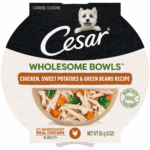 CesarCesar Wholesome Bowls Chicken, Sweet Potatoes & Green Beans Wet Dog Food
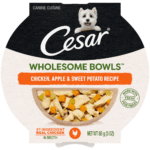 CesarCesar Wholesome Bowls Chicken, Apple & Sweet Potato Wet Dog Food
Show 5 more
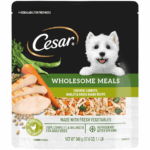 CesarCesar Wholesome Meals Chicken, Carrots, Barley & Green Beans Wet Dog Food
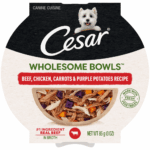 CesarCesar Wholesome Bowls Beef, Chicken, Carrots & Purple Potatoes Wet Dog Food
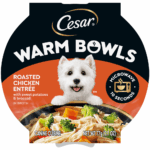 CesarCesar Warm Bowls Roasted Chicken Entrée With Sweet Potatoes & Broccoli Wet Dog Food
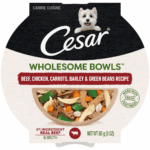 CesarCesar Wholesome Bowls Beef, Chicken, Carrots, Barley & Green Beans Wet Dog Food
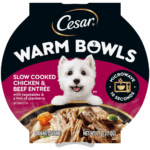 CesarCesar Warm Bowls Chicken & Beef With Vegetables Entrée Wet Dog Food
Sources
What we read
Checked October 22, 2026.
- 1 Soybean oil and beef tallow in dry extruded diets for adult dogs
- 2 Effects of animal and soy fats and proteins in the diet on fatty acid concentrations in the serum and skin of dogs
- 3 Linoleate-enriched diet increases both linoleic acid esterified to omega hydroxy very long chain fatty acids and free ceramides of canine stratum corneum without effect on protein-bound ceramides and skin barrier function
- 4 Exploring the potential link between vegetable oil supplementation and adverse food reactions in dogs: a preliminary study
- 5 Soybean oil
- 6 Proper Storage of Pet Food & Treats
- 7 AAFCO Dog Food Nutrient Profiles
- 8 Reading Labels
- 9 Emission Factor Documentation for AP-42 Section 9.11.1 Vegetable Oil Processing
- 10 Health Canada's Position on Highly Refined Oils Derived from Food Allergen Sources
- 11 Pancreatitis in Dogs and Cats